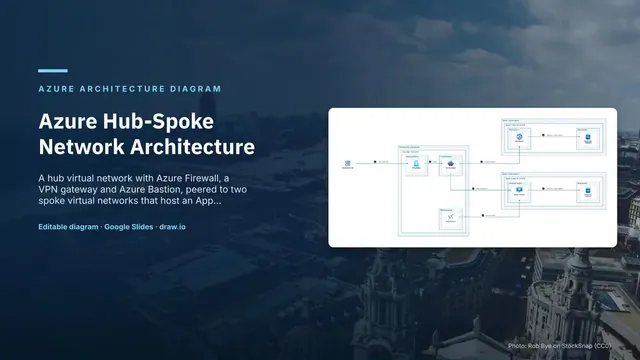
Azure Hub-Spoke Network Architecture
Slides + PowerPoint5 slides
Free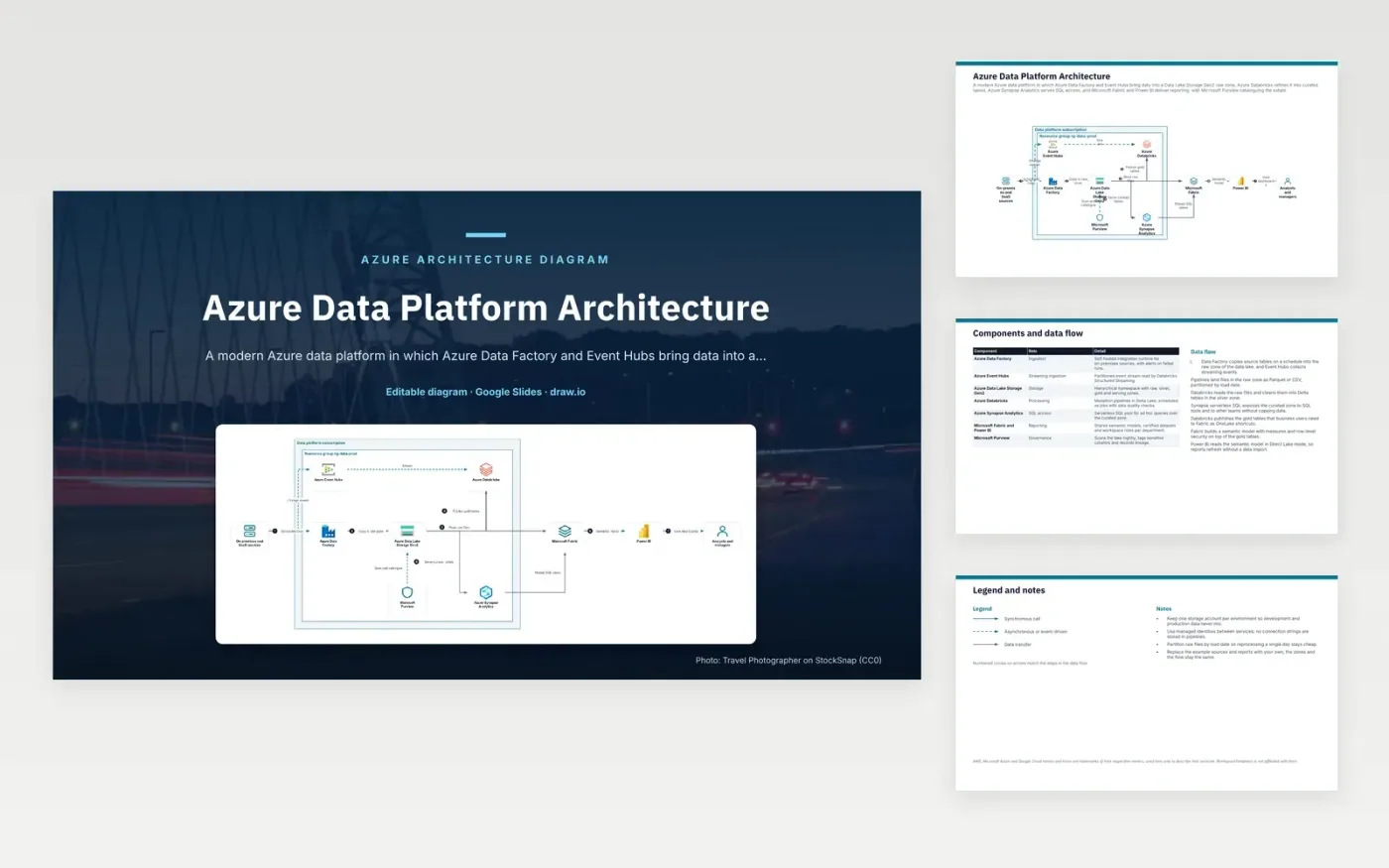
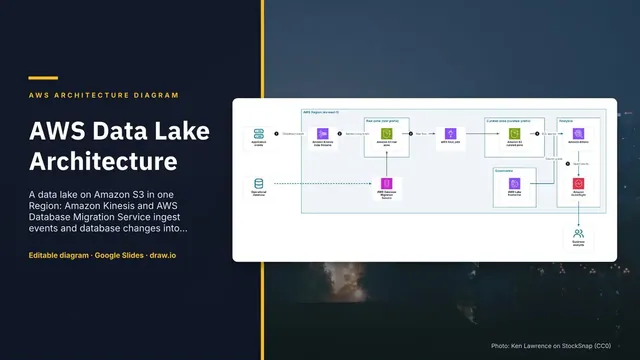
Azure Data Factory copies source tables on a schedule, and Event Hubs collects streaming events. Both land files in the raw zone of Azure Data Lake Storage Gen2, partitioned by load date. Azure Databricks reads the raw files, cleans them into Delta tables in the silver zone and publishes gold tables. Synapse serverless SQL queries the curated zone in place. Microsoft Fabric exposes the gold tables as OneLake shortcuts, and Power BI reads a Fabric semantic model in Direct Lake mode.
The design keeps one copy of the data in the lake and lets each consumer read it where it sits, so no team loads the same tables twice. Partitioning raw files by load date keeps a reprocessing run for one day cheap. Purview scans the lake every night, tags sensitive columns and records lineage, which matters once several departments share the same gold tables. A smaller estate could skip Synapse and serve everything from Fabric, or run the streaming feed as a nightly batch.
The diagram uses the official Microsoft Azure architecture icons, each labelled with its service name. AWS, Microsoft Azure and Google Cloud names and icons are trademarks of their respective owners, used here only to describe their services. WorkspaceTemplates is not affiliated with them.
Click Make a copy in Google Slides, then confirm on the Google page. The copy is saved to your own Google Drive.
Rename On-premises and SaaS sources, Azure Event Hubs, Azure Data Factory and the other boxes inside Data platform subscription to your own components, and delete the ones your system does not have.
Rewrite the 7-step data flow and the 7-row components table so they match the arrows you keep.
For the draw.io version, download azure-data-platform-architecture-diagram.drawio and open it at app.diagrams.net.
The medallion pattern splits data into bronze, silver and gold layers. Bronze holds raw data as it arrived, silver holds cleaned and conformed tables, and gold holds tables shaped for business use. Each layer is stored as Delta tables, so a step can be rerun.
Direct Lake mode lets a Power BI semantic model read Delta tables in OneLake without importing a copy of the data. The model loads only the columns a query needs, so reports can refresh quickly. It depends on the data being stored in the Delta format.
A managed identity gives an Azure resource its own identity in Microsoft Entra ID, so it can sign in to other services without a stored secret. Pipelines and jobs then carry no connection strings that could leak or expire. Access is granted by role assignment and can be removed in one place.
More Google Slides templatesMore developer workflows templates
Slides + PowerPoint5 slides
Free
Slides + PowerPoint5 slides
Free
Slides + PowerPoint5 slides
Free
Slides + PowerPoint5 slides
Free
Slides + PowerPoint5 slides
Free
Slides + PowerPoint5 slides
Free
Slides + PowerPoint5 slides
Free
Slides + PowerPoint5 slides
Free