Brand Positioning Statement
Docs + Word7 pages
Free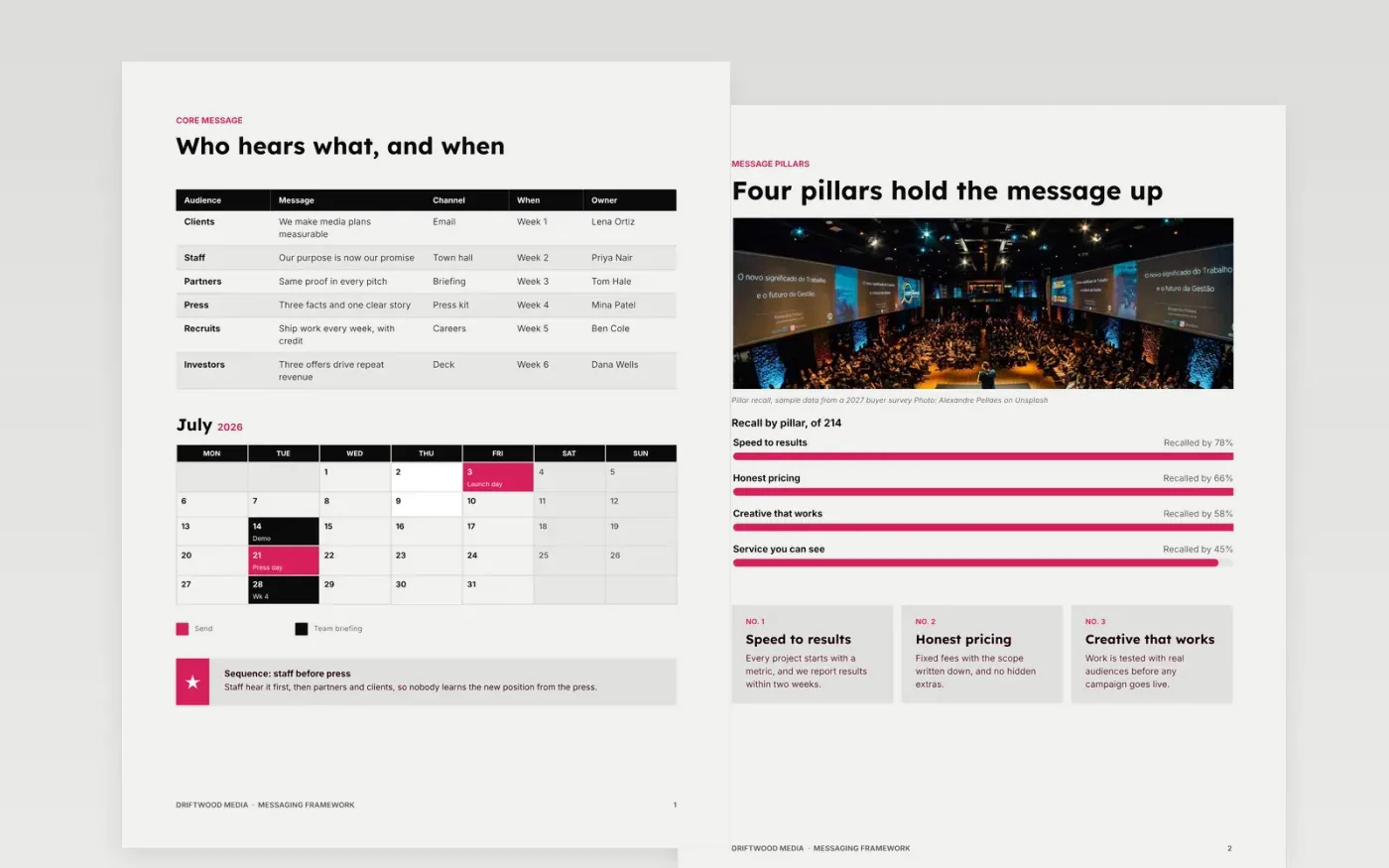
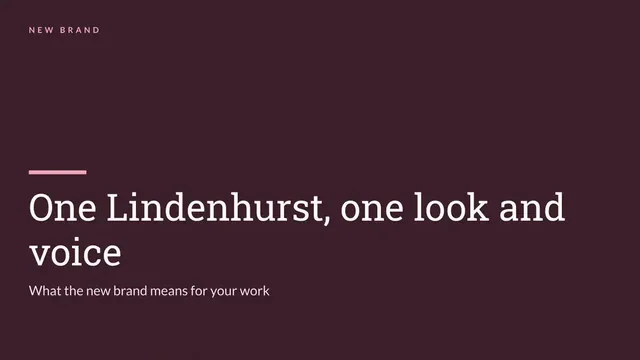
Product marketers write a lot of copy, and it drifts when no one agrees what the brand stands for, who it is for and which proof backs each claim. This template builds a message house: a core message, the pillars that support it, the proof points behind each pillar, and variants for each audience. It finishes with boilerplate copy, so the sentences used in email, pitches and press stay the same.
The sample describes Driftwood Media, a fictional studio, with survey counts, client testimonials and a sample email, so you can see how a finished framework reads. Replace the figures, quotes and personas with research you can stand behind, and keep every proof point tied to evidence you hold. Have legal check each boilerplate before it goes into use.
Click Make a copy in Google Docs, then confirm on the Google page. The copy is saved to your own Google Drive.
Write the positioning statement and the four pillars, then check each pillar against your own evidence.
Replace the sample client quotes and survey figures with real results you can show and date.
Set the audience variants and the email boilerplate, then have legal check every claim before use.
Delete the guide page, then share the framework with your team or present it from Google Docs.
No. Driftwood Media, its people, the clients, the testimonials, the survey counts and the email are fictional sample data. Replace them with your own research before you use the framework.
Three or four is usually enough. Each pillar needs two or three proof points, and a fifth pillar tends to dilute the message so that no single pillar is remembered.
Product marketing should own it and review it each year or after a launch. Sales, support and the agency should work from the same version, with a named owner for each change.
Docs + Word7 pages
Free
Docs + Word7 pages
Free
Docs + Word6 pages
Free