Brand Strategy Deck
Slides + PowerPoint12 slides
Free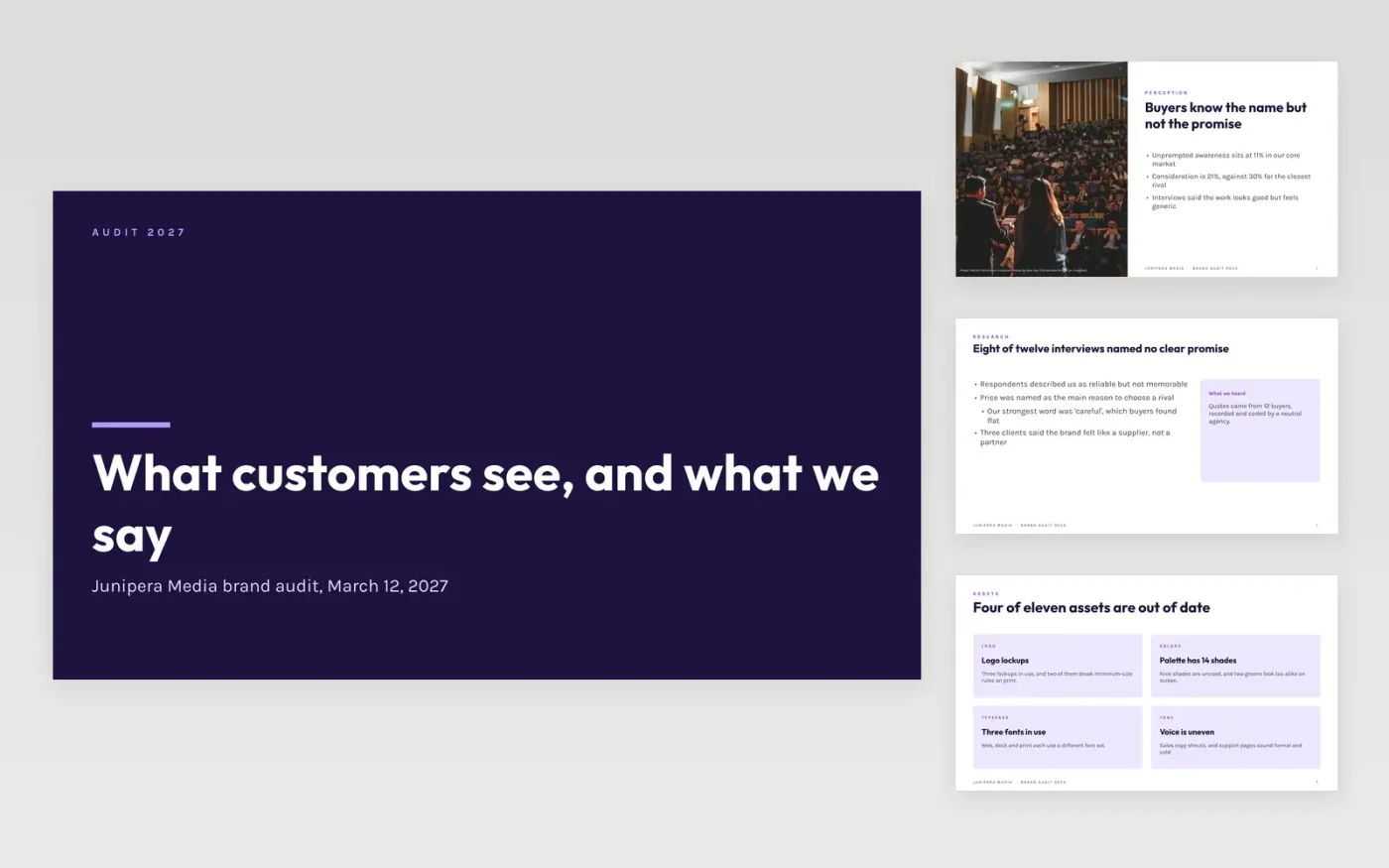
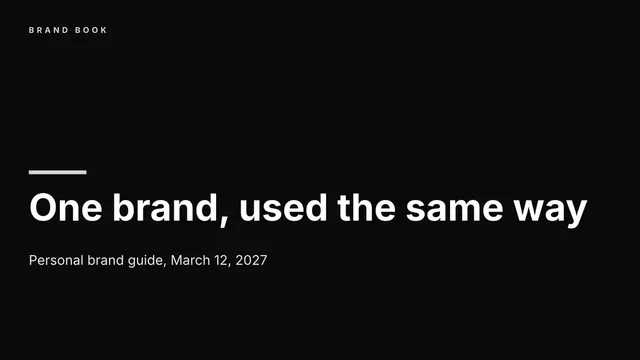
Strategy built on a brand nobody has measured tends to fix the wrong problems. This Google Slides deck works through an audit in order: what buyers perceive, which assets are in use, where consistency breaks down, how rivals position themselves and what the findings mean. Each slide gives the evidence first and the implication second.
The sample follows Junipera Media, a fictional marketing company with eleven brand assets and three rivals. Its awareness figures, interview quotes, palette counts and rival positions are invented sample data. Replace them with your own survey results, asset inventory and competitor set before you present the findings to the client.
Click Make a copy in Google Slides, then confirm on the Google page. The copy is saved to your own Google Drive.
Replace the sample survey figures and quotes with your own research results.
Inventory every asset, then update the cards and columns with the real findings.
Place each rival on the matrix using evidence from its own site and public materials.
Delete the guide slide, then share the deck with the client or present the findings.
Eight to fifteen buyer interviews give a usable read on perception, according to most agencies. Code the answers with the same categories each time, and have someone outside the brand team check the coding.
No. Junipera Media, Rival A, Rival B, Rival C, the survey figures and the quotes are fictional sample data. Replace all of them with your own research before using any of this content.
Not always. An audit should show whether the problem is perception, consistency or the brand itself. Recommend a rebrand only when the evidence shows the name or the promise is the cause.
Slides + PowerPoint12 slides
Free
Slides + PowerPoint11 slides
Free
Slides + PowerPoint10 slides
Free
Slides + PowerPoint11 slides
Free
Docs + Word7 pages
Free
Docs + Word8 pages
Free
Docs + Word8 pages
Free
Docs + Word8 pages
Free