Company OKR Summary
Docs + Word6 pages
Free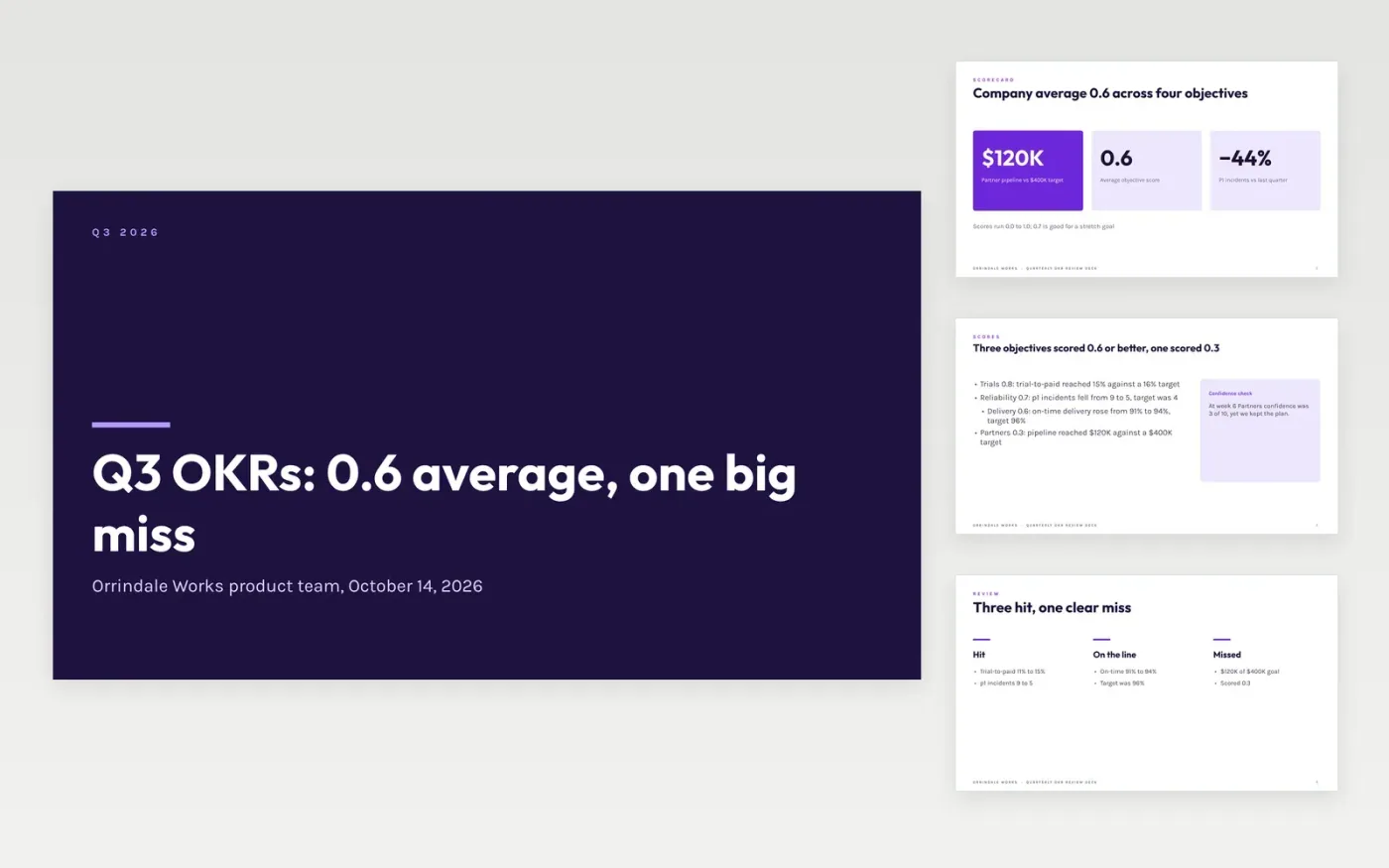
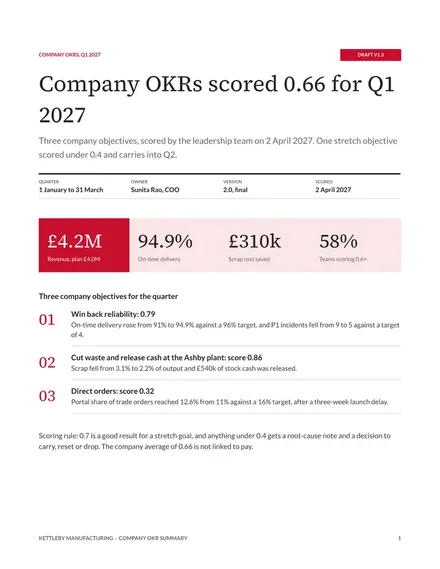
OKR reviews go wrong when scores are softened or rewritten after the fact. This deck states the score first, shows which objectives hit, partly hit or missed, records the lessons that should change behavior, and ends with a next-quarter roadmap and dated check-ins.
The sample is a Orrindale Works product team reviewing Q3 2026: four objectives averaging 0.6, with trial-to-paid up from 11% to 15%, p1 incidents down from 9 to 5, and one partner objective scoring 0.3. Replace the objectives, key results and owners with your own and score honestly.
Click Make a copy in Google Slides, then confirm on the Google page. The copy is saved to your own Google Drive.
Replace the sample objectives with at most five of yours, then give each key result a baseline, a target and one owner.
Score every key result before writing commentary, then update the review columns, cards and lessons to match.
Copy the two lessons that change behavior into the next-quarter roadmap and the check-in dates.
Delete the guide slide at the end, then share the deck or present it.
No. When scores affect pay, teams set safe targets. Treat a 0.7 on a stretch goal as a good result and keep scores for learning rather than performance reviews.
Three to five, each with three or four measured key results. The sample has four. More than five means nothing gets real focus.
No. Orrindale Works, the people named and every figure and email address are fictional sample data, there to show what a finished OKR review looks like.
More Google Slides templatesMore business operations templates
Docs + Word6 pages
Free
Docs + Word6 pages
Free
Slides + PowerPoint14 slides
Free
Slides + PowerPoint12 slides
Free
Slides + PowerPoint12 slides
Free
Sheets + Excel3 slides
Free