Meeting Notes
Docs + Word7 pages
Free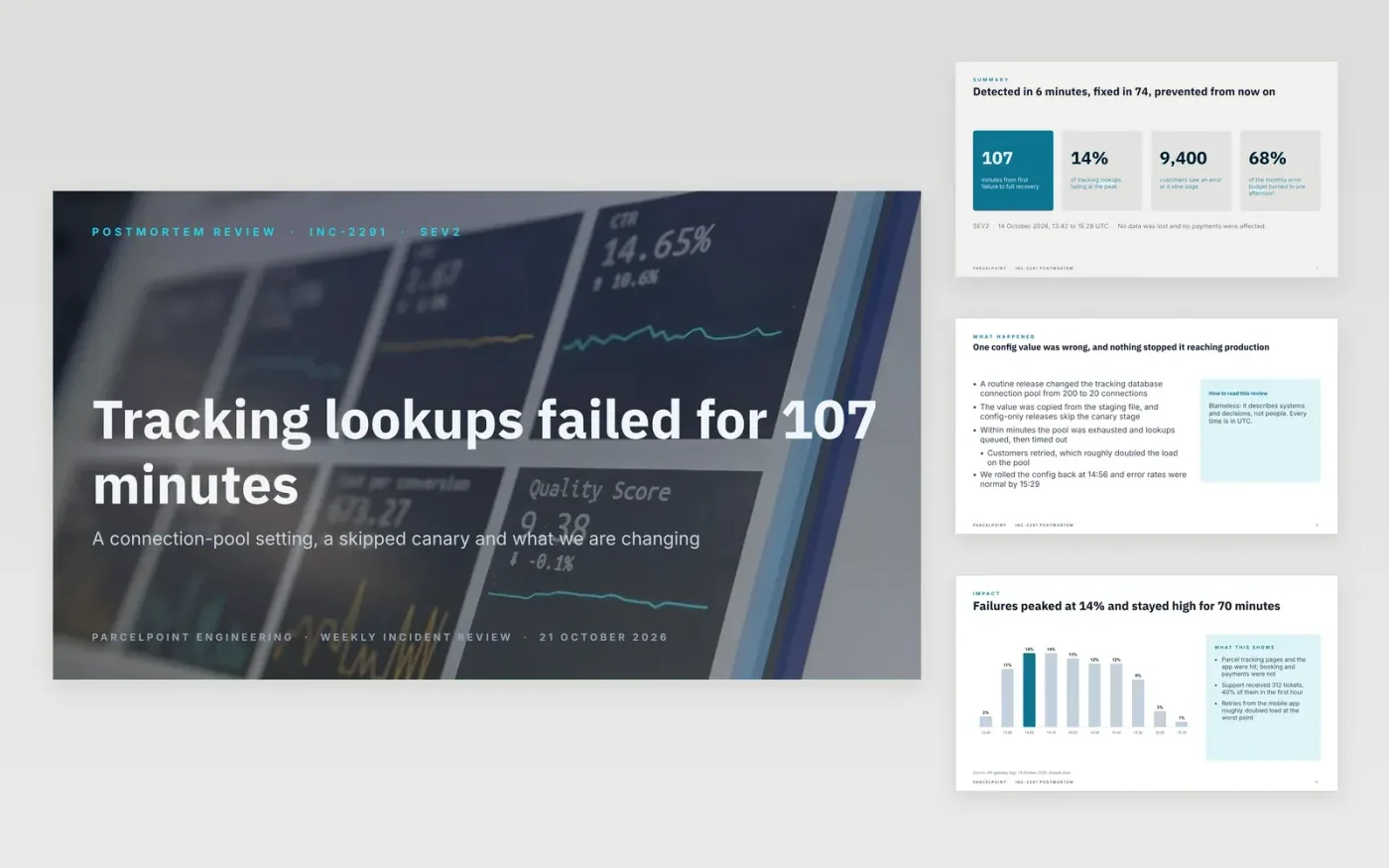
A written postmortem is read once; a review meeting is where leaders decide whether the fix addresses causes or symptoms. This deck presents a blameless postmortem in the order a review asks its questions: what happened and how bad it was, when, why it was possible, how the response went, and what will change.
It ships complete for a fictional delivery-tracking company, with a SEV2 incident, a timeline in UTC, an impact chart, a four-gap root cause, a response scorecard and an action table with owners and dates. Replace the sample story with your incident and delete the guide slide.
Click Make a copy in Google Slides, then confirm on the Google page. The copy is saved to your own Google Drive.
Set the incident ID, severity, UTC start and end times on the title and summary slides.
Rebuild the timeline from your paging tool and chat export, and replace the chart data with your own error-rate figures.
Replace the root cause with your own chain of causes and give every action one owner and one due date.
Delete the guide slide, then present or share with File → Download → PDF.
No. Parcelpoint, the people, the INC-2291 incident and every figure are fictional, written to show what a calm, specific postmortem sounds like.
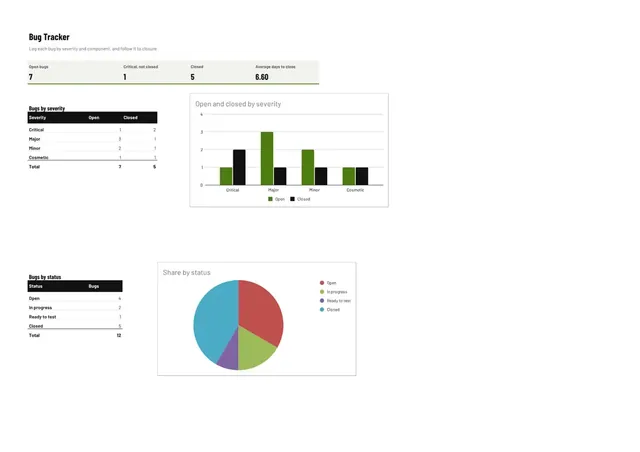
The chart is a picture so it looks the same in every account. Delete it and insert your own with Insert → Chart, or paste a screenshot of your monitoring graph and keep the three insights beside it.
Blameless reviews describe systems and decisions. Naming a person teaches a team to hide the next mistake; the deck asks which gaps allowed the error to reach production instead.
Stephen Dawson on Unsplash, used under the Unsplash License and credited in the deck.
More Google Slides templatesMore developer workflows templates
Docs + Word7 pages
Free
Slides + PowerPoint11 slides
Free
Docs + Word7 pages
Free
Docs + Word8 pages
Free
Docs + Word6 pages
Free
Docs + Word9 pages
Free
Docs + Word2 pages
Free