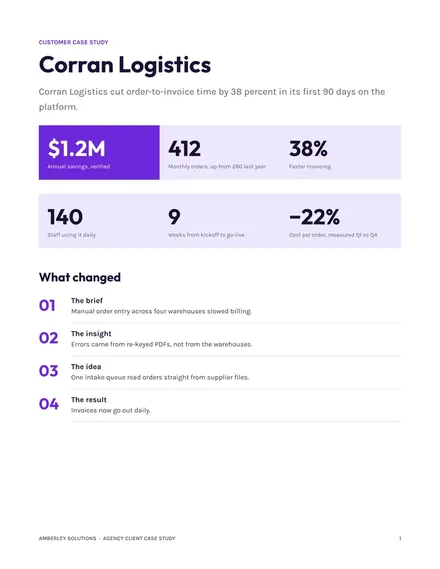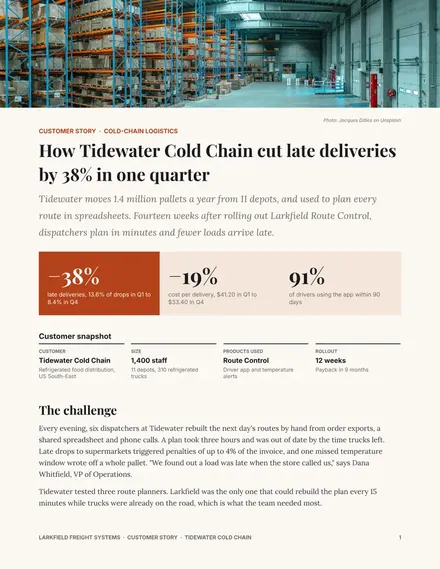
Customer Case Study
Docs + Word3 pages
Free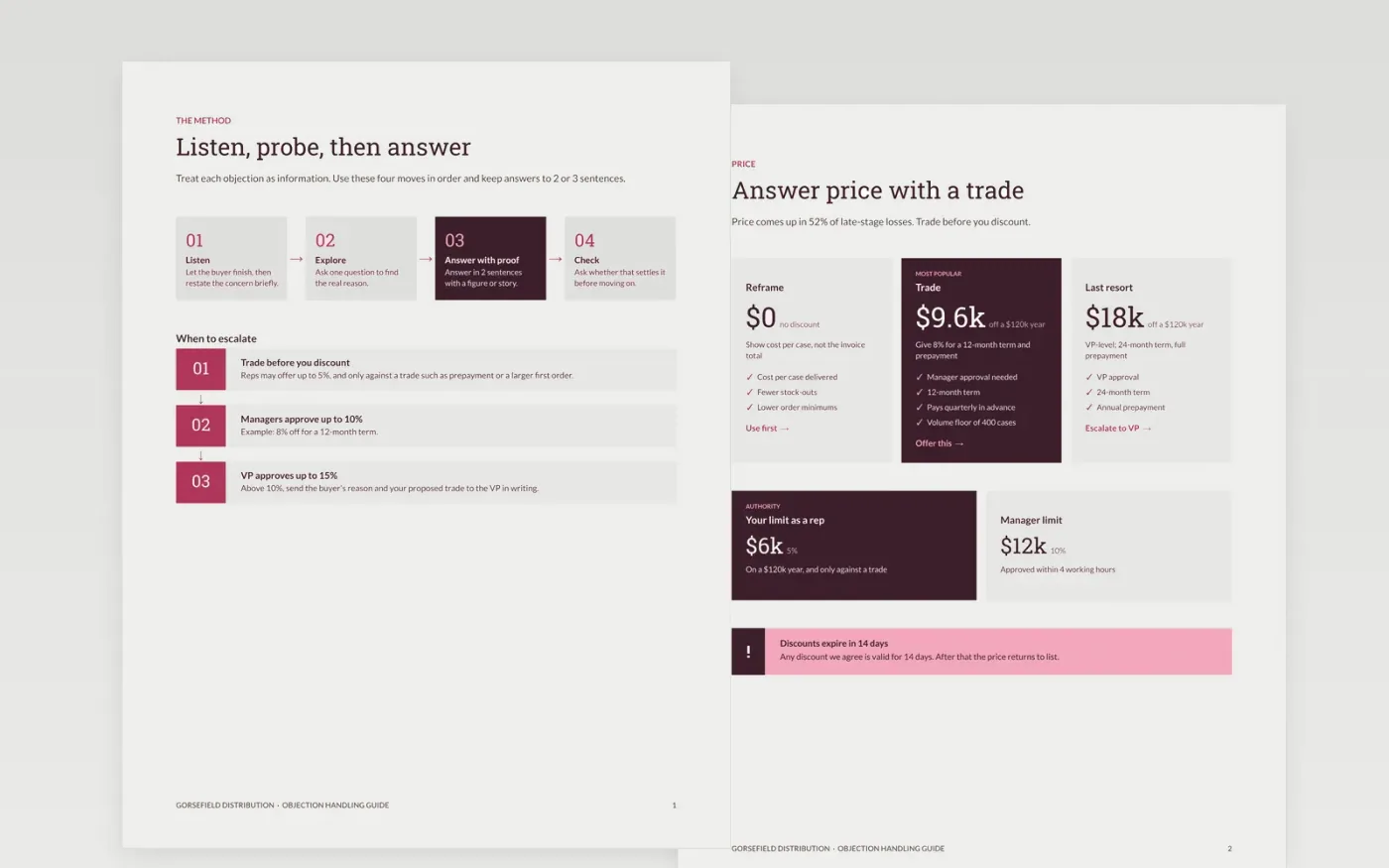
Deals stall on the same four concerns: price, timing, competitors and who decides. This guide teaches one method, listen, explore, respond and check, then applies it to each type with wording a rep would actually say. It also covers discount limits, the trade to ask for in return and when to escalate.
The sample follows Gorsefield Distribution, a fictional wholesale distributor, with price handled by trading rather than discounting, a 16-week plan for timing objections, a competitor comparison, a decision map and a role-play schedule. Replace the objections with your top five from lost-deal notes and enter your own discount limits.
Click Make a copy in Google Docs, then confirm on the Google page. The copy is saved to your own Google Drive.
Collect your team's five most frequent objections from lost-deal notes and replace the samples, rewriting each response in your own voice.
Enter your actual discount limits and what a rep may ask for in return, and delete sections for objection types you never meet.
Choose three scenarios for the next practice session and set the scoring rubric on the practice page.
Delete the guide page at the end, then share the guide with your team.
Most objections hide the real reason. Asking one question before answering shows the buyer they were heard and tells the rep which response actually fits.
No. Ask for a trade first, such as a longer term, a larger first order or faster payment. A discount with no trade teaches buyers that every price is negotiable.
No. The organization, the competitors, the people named and every figure in the sample are fictional. Replace them with your own market, objections and limits.
Docs + Word3 pages
Free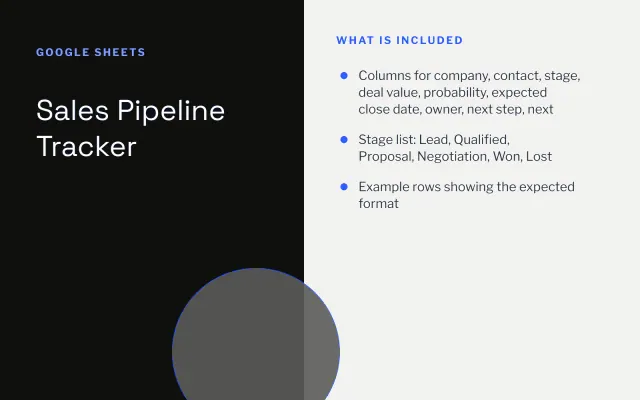
Google Sheets
Free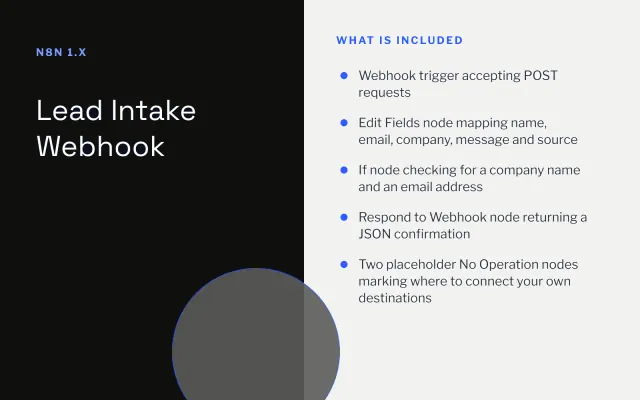
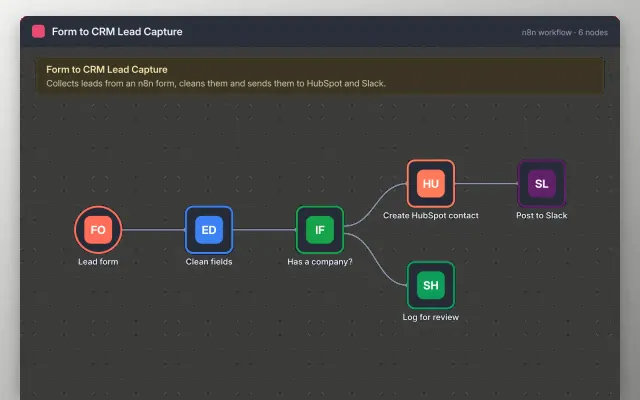
n8n
Free
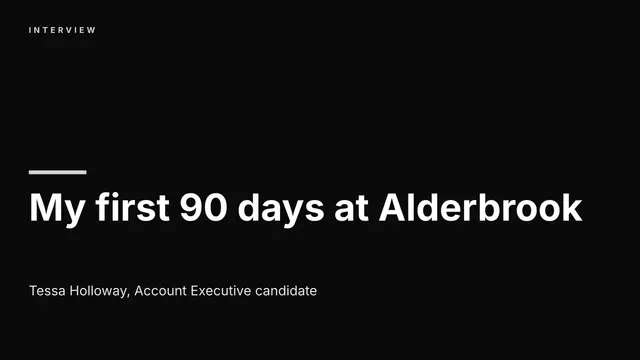
Slides + PowerPoint12 slides
Free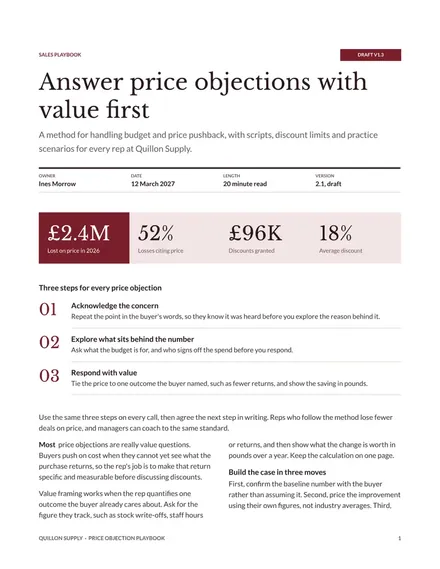
Docs + Word7 pages
Free