Code of Conduct
Docs + Word7 pages
Free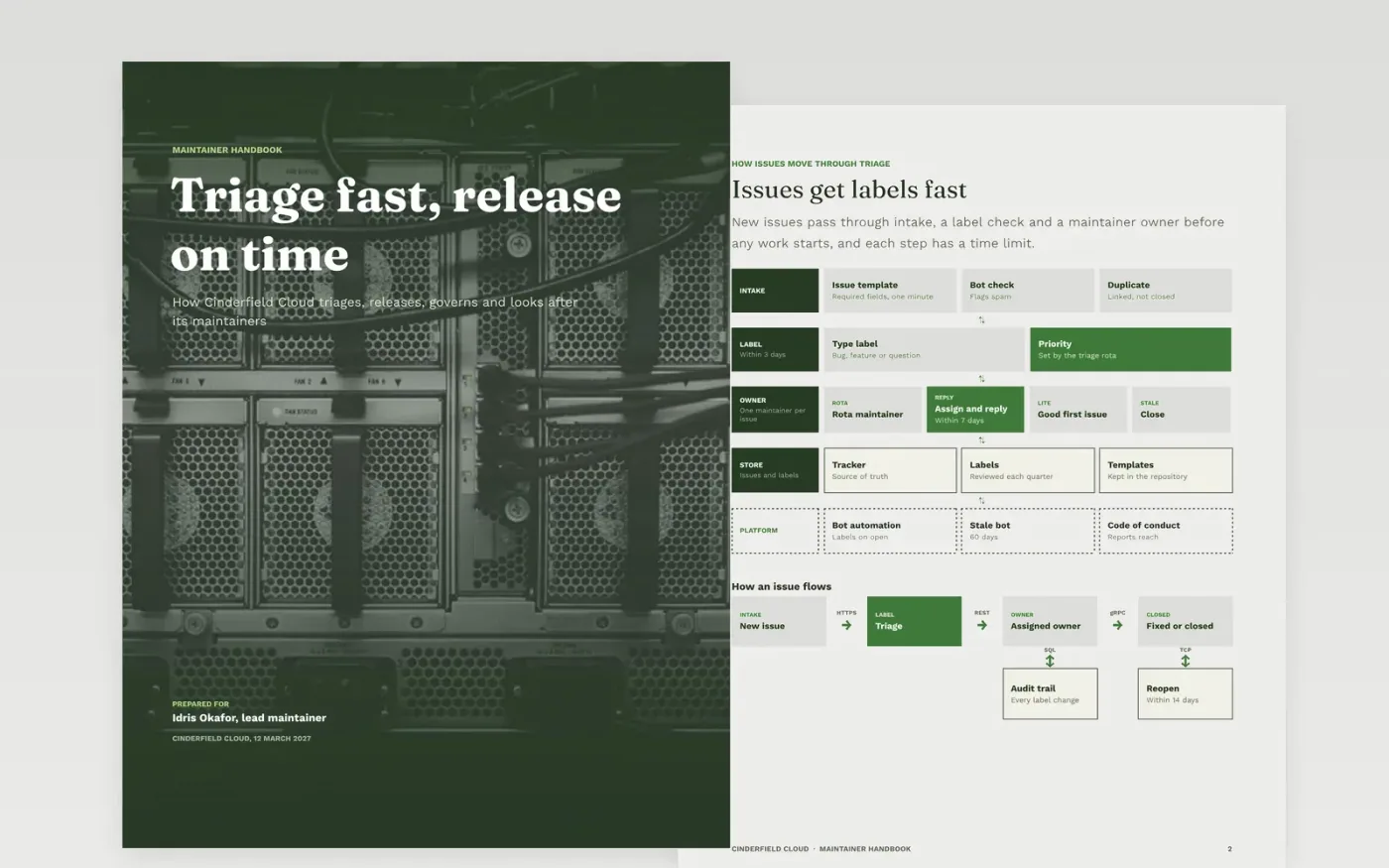
Open source projects stall when maintainers answer the same questions, make decisions in private and burn out before the next release. This handbook writes those rules down: how issues are triaged, when releases ship, who decides what, how the project is funded, and how maintainers keep their time. Each section names an owner and a time limit, so a newcomer knows what to expect.
The sample handbook is for Cinderfield Cloud, a fictional project with a six-weekly release cycle, two to five maintainers and a £662,000 income line. Replace the roles, response times and budget first, then run the set-up steps on a fresh machine. Every name, figure and contact in the file is fictional sample data.
Click Make a copy in Google Docs, then confirm on the Google page. The copy is saved to your own Google Drive.
Replace the project name, licence and repository links on the first page with your own.
Run the set-up steps on a fresh machine, and correct any step that fails.
Label real good first issues, add a code of conduct enforcement contact, and name the decision makers.
Delete the guide page, then share the handbook in the repository or present it to contributors.
No. The handbook explains how people contribute and who decides, but your licence and any contributor agreement still need their own text, checked by a lawyer if companies use the project.
No. Cinderfield Cloud, Idris Okafor, Nell Brandt, the funding figures and the contact details are all fictional sample data. Every email address ends in .example, so replace them before publishing.
As short as they can be while still answering the question a newcomer asks. A reply within three working days and one labelled owner per issue is usually enough to start with.
More Google Docs templatesMore developer workflows templates
Docs + Word7 pages
Free
Docs + Word7 pages
Free
Docs + Word8 pages
Free
Slides + PowerPoint12 slides
Free
Docs + Word7 pages
Free
Docs + Word8 pages
Free
Slides + PowerPoint12 slides
Free