Employee Handbook
Docs + Word21 pages
Free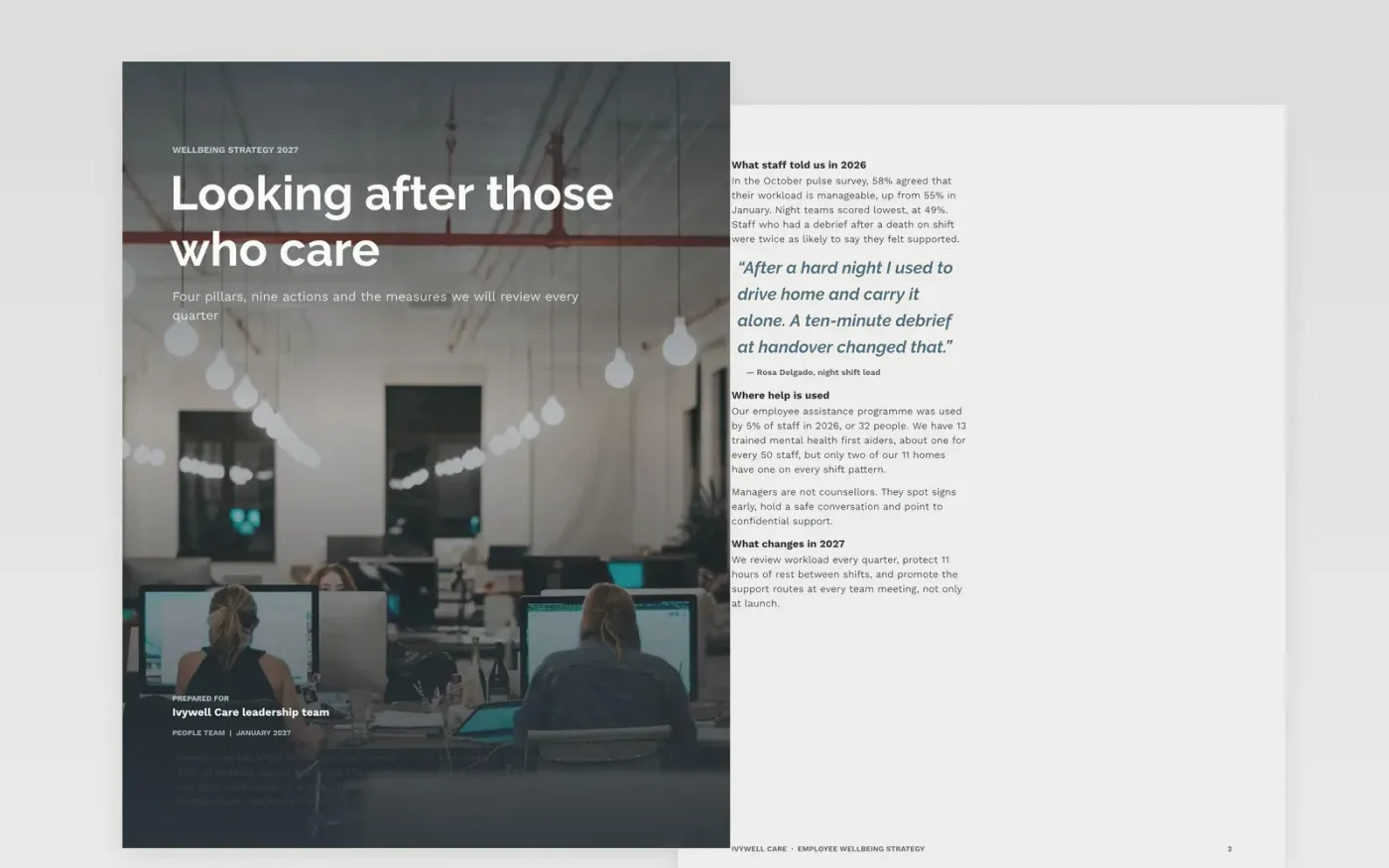
A wellbeing programme that is only perks does little for stress. This template treats wellbeing as a duty of care: it sets out why it matters in your workplace, four pillars, grouped initiatives with owners and dates, a calendar of activity and a scorecard with targets and status. It is built for HR teams who need to show leaders what will be done, by whom and how it will be judged.
The sample is a 2027 strategy for Ivywell Care, a fictional care provider with 640 staff, a $150 per head budget and a clear baseline: 3.8% sickness absence and 58% saying their workload is manageable. Replace the pillars, the owners, the calendar and the support routes first, then choose two measures to review every quarter.
Click Make a copy in Google Docs, then confirm on the Google page. The copy is saved to your own Google Drive.
Choose three or four pillars that match your people's real risks, and replace the context page with your own absence and pulse figures.
Fill the initiatives and the calendar with your dates, owners and budget, and add the workload or stress-risk actions you will take.
Pick two measures, such as absence and a pulse question, and update the scorecard targets. Replace the support routes with your actual EAP and first aiders.
Delete the Make it yours page, then share the strategy or present it.
Three or four is enough. Pick the pillars that match your people's biggest risks, such as workload, rest or financial stress, rather than covering every possible topic.
No. It plans the programme around one, but you should check the stress risk requirements that apply where you operate and run the assessment separately.
No. The organisation, the people and every figure are fictional sample content. Replace them with your own data and names before you share the strategy.
Docs + Word21 pages
Free
Docs + Word7 pages
Free
Word
Free
Slides + PowerPoint12 slides
Free
Docs + Word9 pages
Free