Employee Wellbeing Strategy
Docs + Word7 pages
Free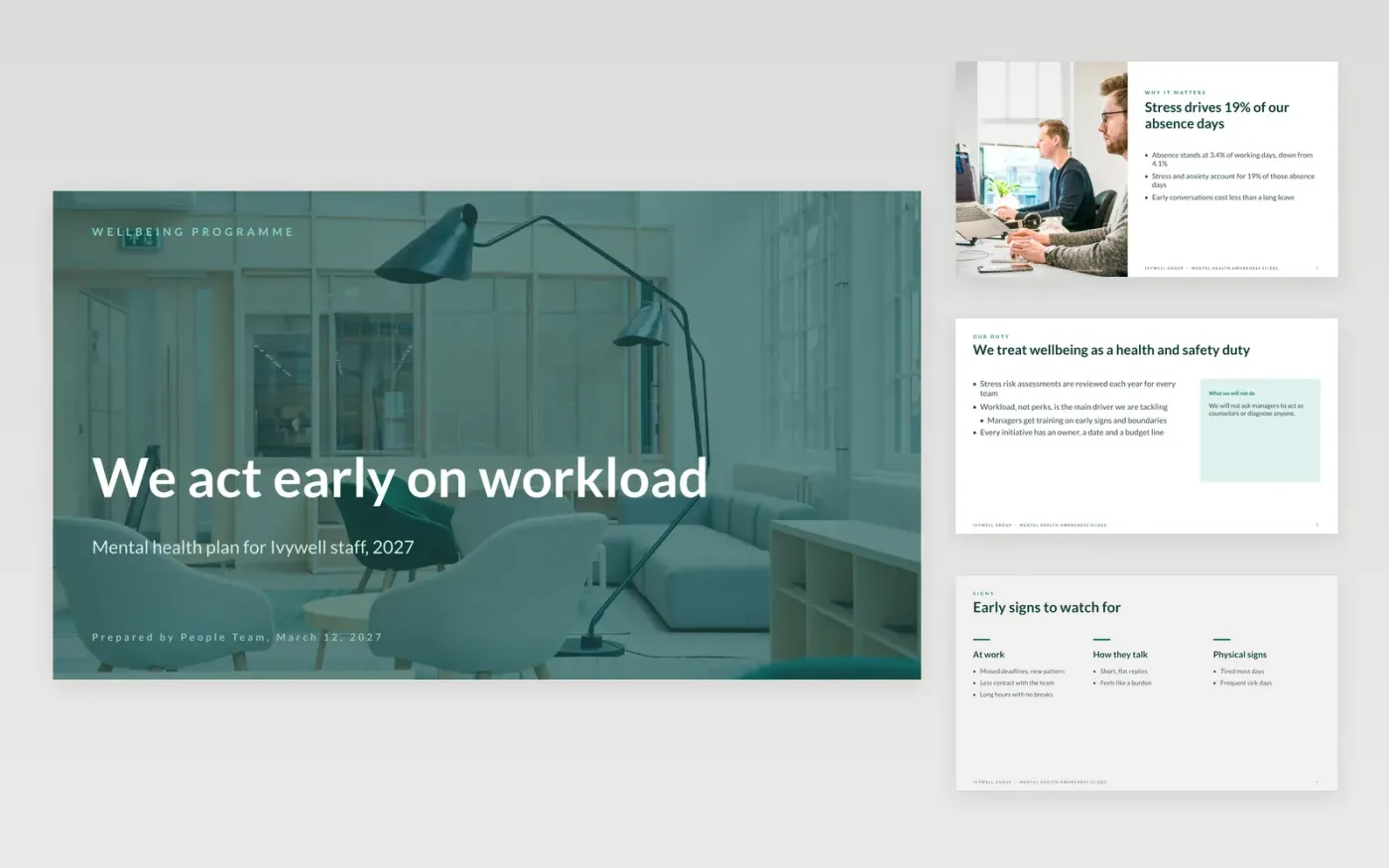
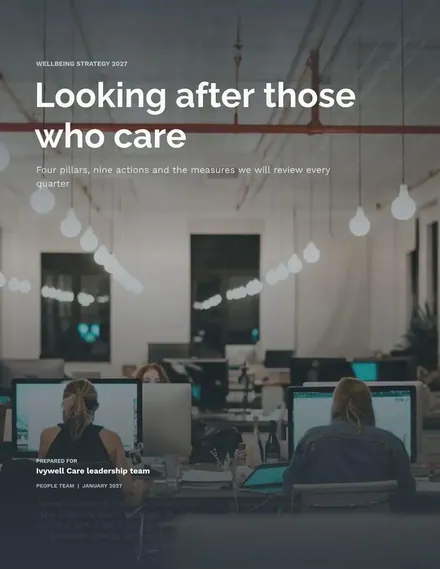
Stress and anxiety drive a large share of sick days, and most teams only notice when someone is already off work. This twelve-slide Google Slides deck gives an employer a plain case for acting early: why it matters, the signs managers can see, how to open a conversation and where people can get confidential help. Each slide is short enough to present in a team meeting, and the language stays non-clinical so that managers keep to their role.
The sample is a fictional Ivywell Group with 1,200 staff, a 3.4% sickness absence rate and 24 first aiders across three sites. It shows the signs, the conversation steps and the support directory in finished form. Replace the figures and the people with your own, confirm the contact details for your EAP and first aiders, and check your stress risk assessment before you present the deck.
Click Make a copy in Google Slides, then confirm on the Google page. The copy is saved to your own Google Drive.
Choose the three or four wellbeing pillars that match your people's risks.
Replace the support directory with your EAP, first aiders and occupational health.
Check the figures and the stress-risk actions against your own data before you present.
Delete the guide slide, then share the deck with managers or present it in a meeting.
No. The deck supports a stress risk assessment but does not replace one. Complete your own assessment for each team, record the actions and review them each year, as local requirements may apply.
No. Ivywell Group, its staff, the EAP details and every figure in the deck are fictional sample data. Replace them with your own before you share the deck with employees.
Yes, but agree the support routes with HR first. Managers should present the signs and the conversation steps, and point people to the EAP and the first aiders rather than promising a solution.
Docs + Word7 pages
Free
Docs + Word7 pages
Free
Docs + Word21 pages
Free