Head-to-Head Sales Battlecard
Docs + Word3 pages
Free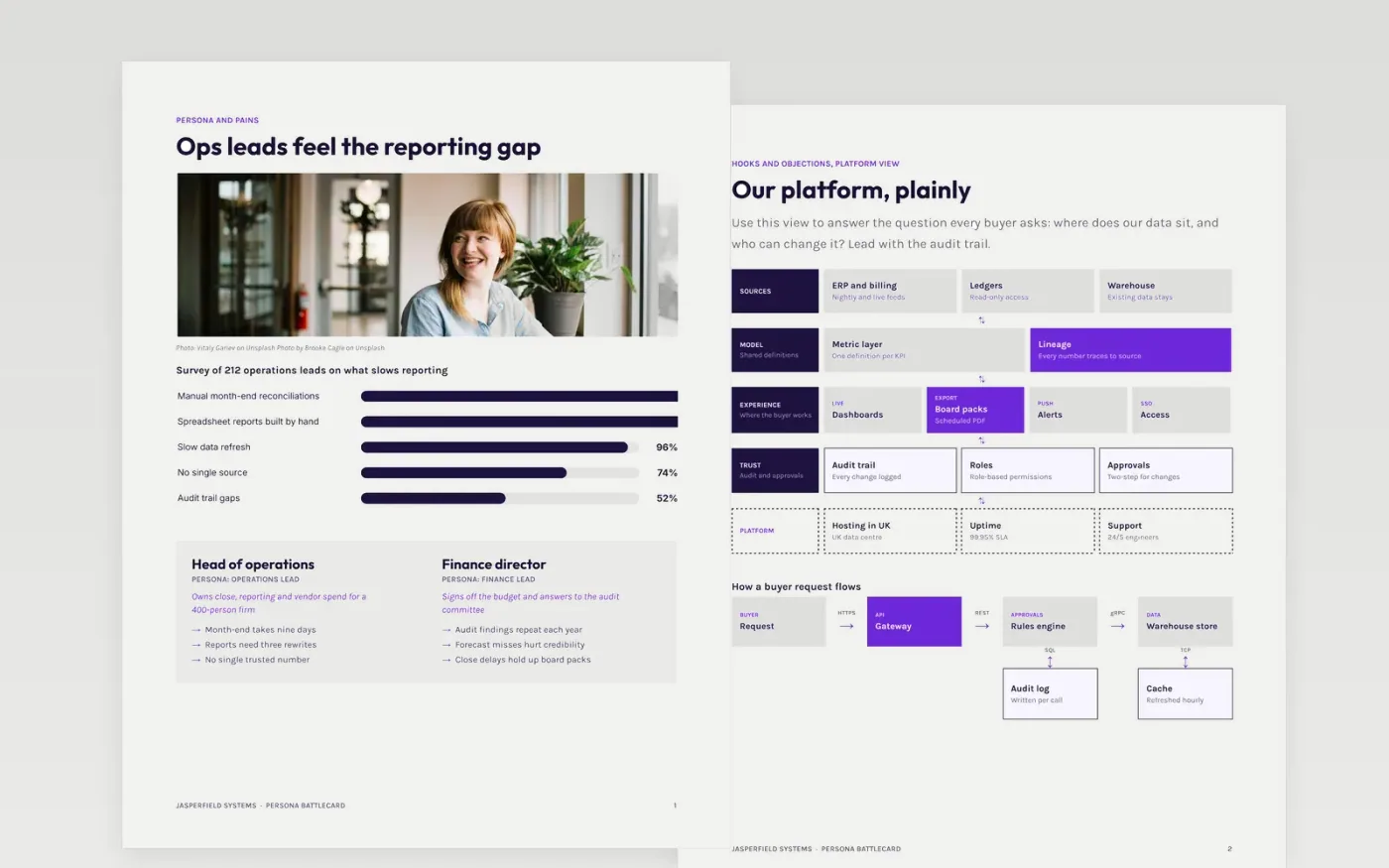
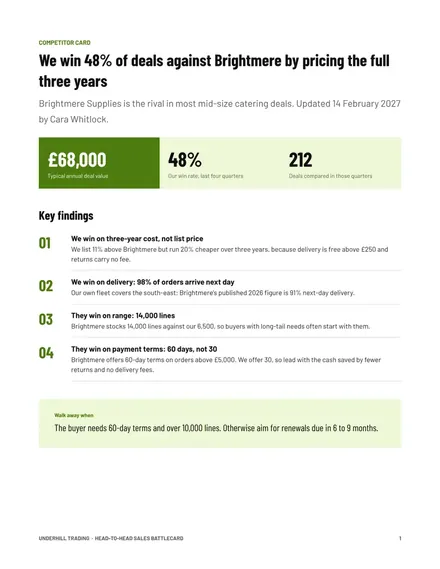
A rep in the middle of a competitive deal has minutes to prepare, and most battlecards are too long to use on a call. This template gives each buyer persona its own card covering the pains the buyer feels, the hooks that open a conversation, and the questions that show where a rival is weaker. It also sets one way to handle each objection, so the whole team answers a named alternative the same way.
The sample describes Jasperfield Systems, a fictional software firm, and a survey of 212 operations leads, so you can see how a finished card reads. Replace the figures, the rival profile and the objection responses with verified facts and the date you checked them, then add the card owner and the last-reviewed date. Keep each response short enough to say aloud during a call.
Click Make a copy in Google Docs, then confirm on the Google page. The copy is saved to your own Google Drive.
Replace the rival name, size and pricing model with verified facts, and record the date you checked them.
Rewrite the where-they-win points from real deals, and say how a rep should respond to each one.
Cut the landmine questions to the four that most often change the buyer's criteria, and add the card owner.
Delete the guide page, then share the card with the sales team or present it from Google Docs.
No. Jasperfield Systems, its people, the rival in the example, the survey results and every win rate are fictional sample data. Verify your own facts before a rep uses the card.
Keep each card to one page and each objection response under 40 words, so a rep can use it during a live call. Long cards go unread, and reps then improvise.
Name one owner, usually a product marketer, and add a last-reviewed date. Check the win rate against the CRM each quarter and retire any claim you cannot prove.
Docs + Word3 pages
Free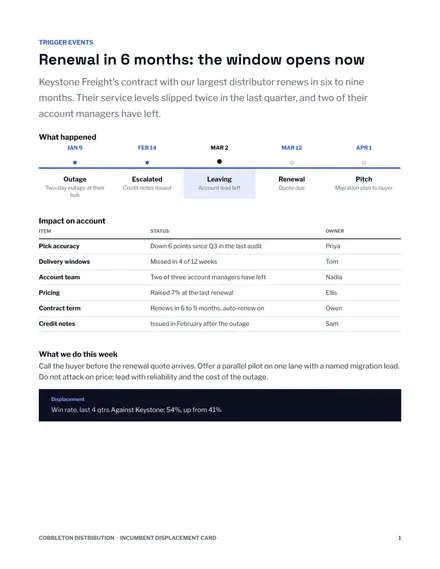
Docs + Word3 pages
Free
n8n
Free