API Documentation
Docs + Word14 pages
Free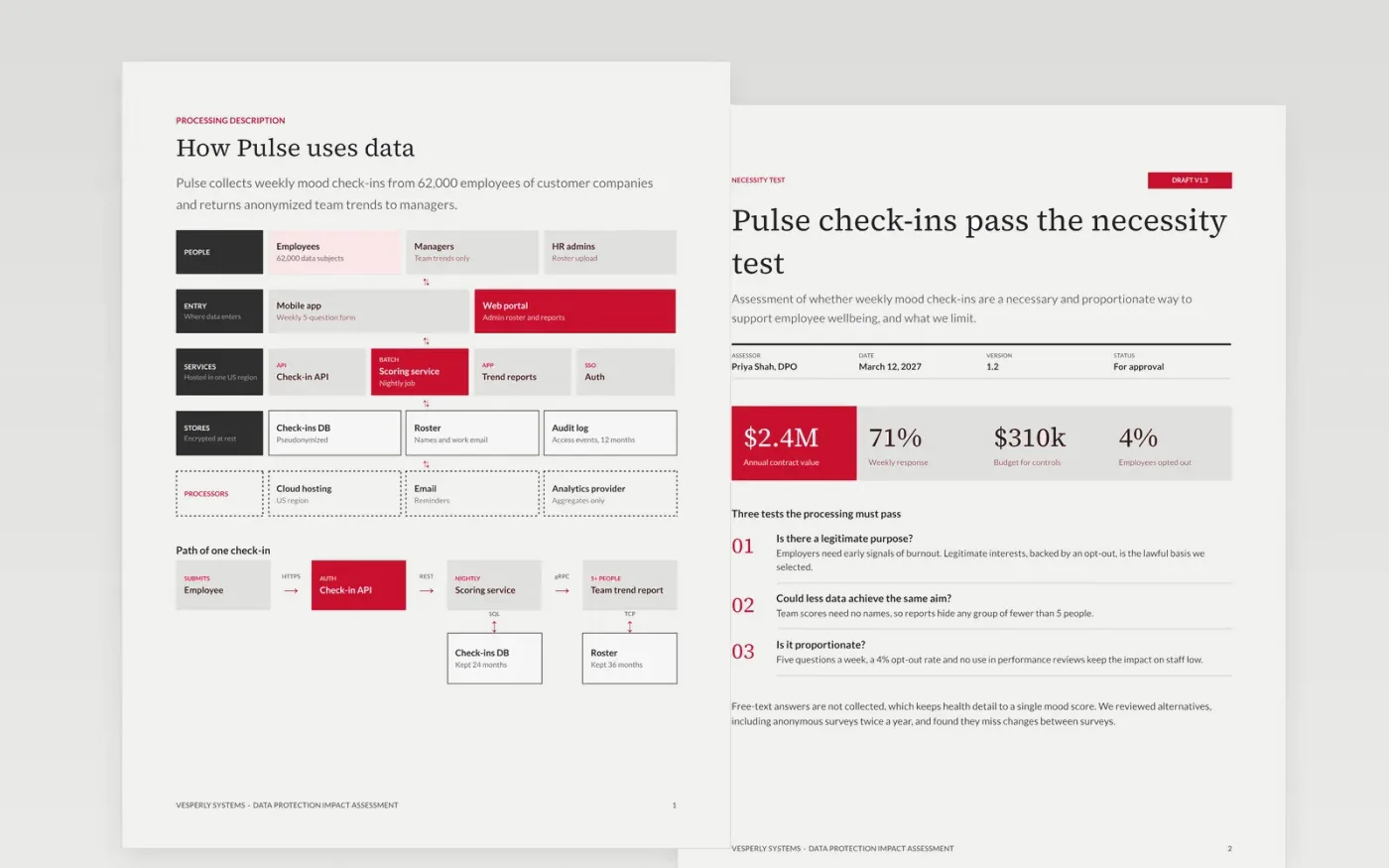
A DPIA fails when it is written after launch or lists risks to the company instead of to the people whose data it holds. This template follows the GDPR order: describe the processing, test necessity, record consultation, score the risks to individuals, list measures with owners and capture the decision. It is a structure to complete with your DPO or counsel, not legal advice.
The sample assesses a fictional wellbeing check-in app from Vesperly Systems used by 62,000 employees. It shows a data flow diagram, a necessity test, five scored risks, a measures scorecard with residual risk and a sign-off page. Replace the system, the data categories, the retention periods and the scores with your own records of processing.
Click Make a copy in Google Docs, then confirm on the Google page. The copy is saved to your own Google Drive.
Replace the processing description with your system, its data flow and the people affected, using your records of processing.
Choose a lawful basis for each purpose with your DPO, then score each risk to individuals and assign a measure, owner and date.
Record the DPO's advice, the decision-maker and the next review date, and have your counsel check the finished assessment.
Delete the guide page at the end, then share the document for sign-off.
No. It is a structure to complete with your data protection officer or counsel. It does not state that any processing activity is lawful, so have the finished DPIA reviewed.
Before the processing starts, while the design can still change. A DPIA finished after launch records a decision that has already been made, which weakens it as evidence.
No. The organization, the people named and every figure in the sample are fictional. Replace them with your own system, data categories, scores and approvers.
More Google Docs templatesMore developer workflows templates
Docs + Word14 pages
Free
Slides + PowerPoint12 slides
Free
Docs + Word12 pages
Free
Docs + Word8 pages
Free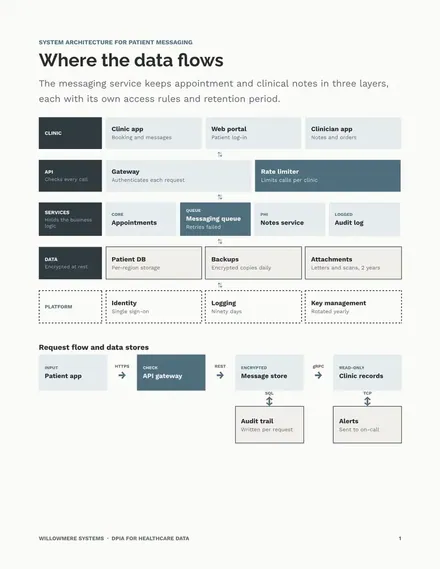
Docs + Word8 pages
Free