Career Ladder Framework
Docs + Word6 pages
Free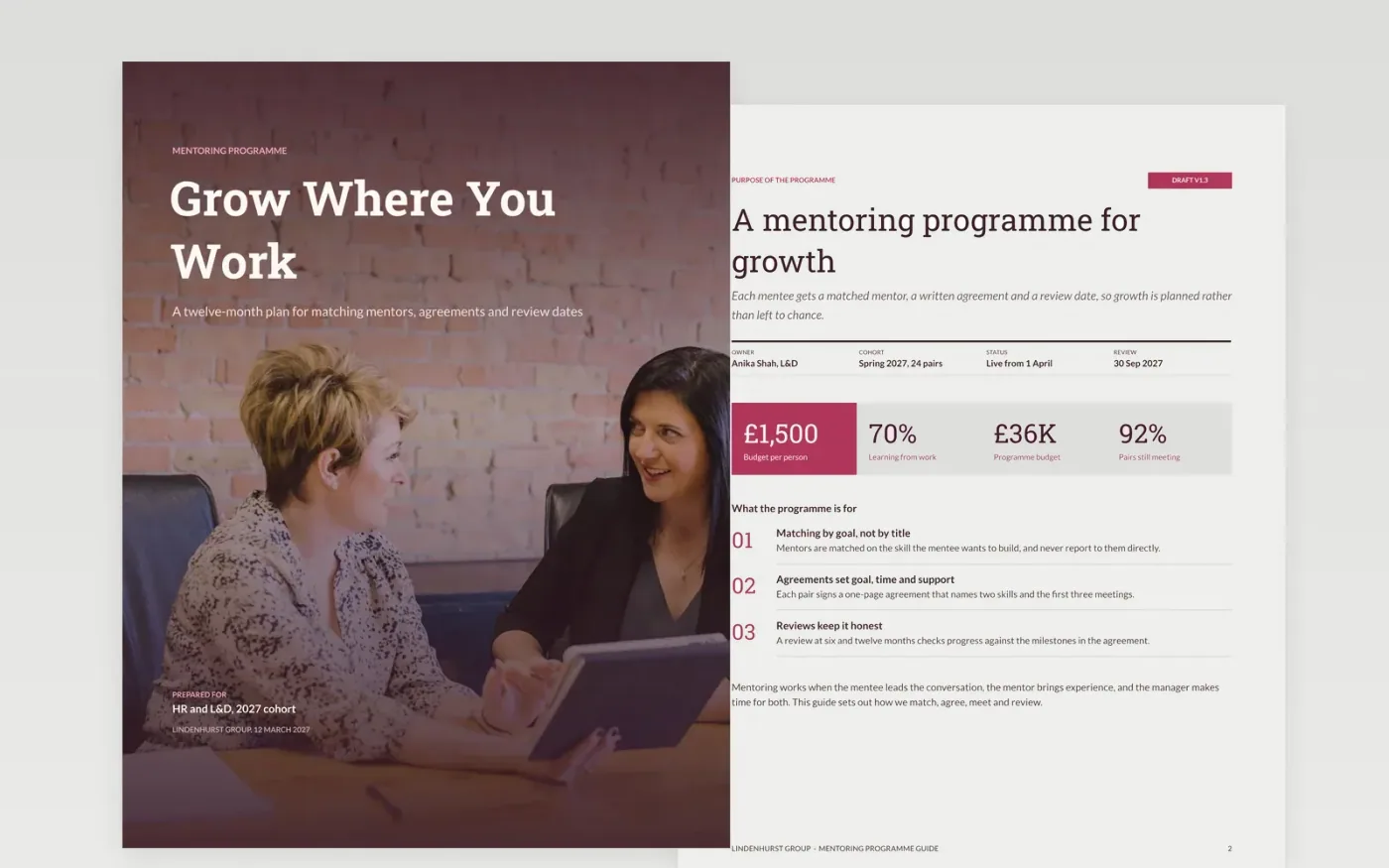
Mentoring programmes often start with enthusiasm and fade after the first lunch, because nobody set a goal, a time or a review date. This career development plan template sets out how a programme runs: who matches with whom, what the written agreement says, how the first meetings are structured, and when each pair reviews progress. It also gives L&D one place to check the programme's design against its aims.
The sample describes Lindenhurst Group's spring 2027 cohort of 24 pairs, with a £36K budget, a steering group and review dates. Replace the people, matching rules, agreement wording and figures with your own, and align the skills with your competency framework. Keep the agreement to one page, so pairs will read it and keep to it.
Click Make a copy in Google Docs, then confirm on the Google page. The copy is saved to your own Google Drive.
Replace the names, budget and dates with your own, then check the matching rules.
Align the skills and level criteria with your competency framework before pairs are matched.
Keep the agreement to one page, and set the mid-point and final review dates now.
Delete the guide page, then share the guide with pairs or present it from Google Docs.
No. Lindenhurst Group, its staff, the cohort of 24 pairs, the budget, the contacts and the survey results are fictional sample data. Replace them with your own details before you invite anyone to join.
No. Mentors should not report to the mentee or make decisions about pay and promotion. Keeping that line clear lets the mentee speak openly, and it protects both people if a concern arises.
No, and the agreement should say so. A pair builds skills and evidence, and promotion depends on criteria and vacancies. Stating that plainly stops a mentee from reading the scheme as a promise.
Docs + Word6 pages
Free
Docs + Word8 pages
Free
Docs + Word7 pages
Free