Disciplinary Policy
Docs + Word8 pages
Free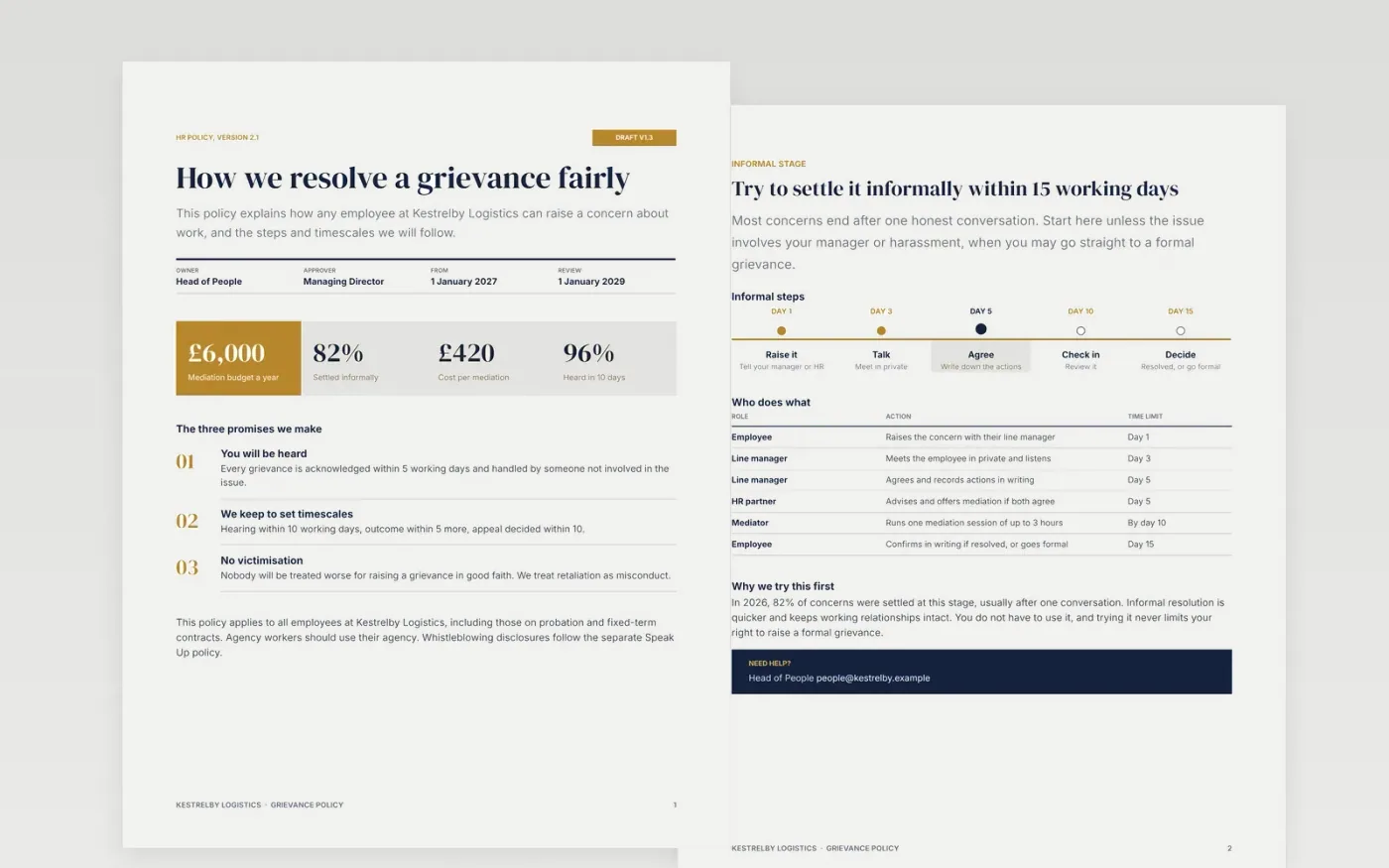
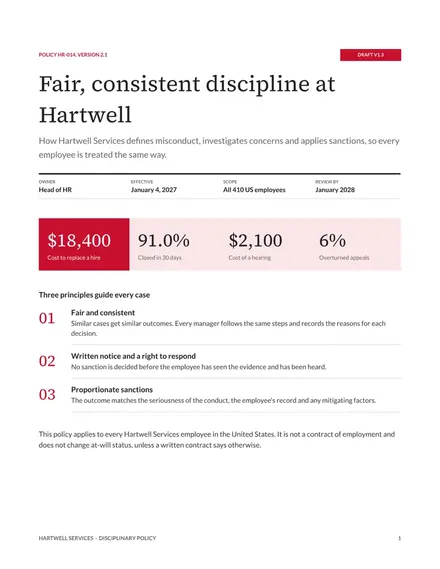
A grievance policy protects both sides: staff know how to raise a concern and what to expect, and managers follow the same fair steps every time. This template sets out purpose and scope, an informal stage, four formal steps, a timescale chart and an appeal, with a control block for owner, approver and review date.
The sample belongs to Kestrelby Logistics: acknowledge within 5 working days, hold the hearing within 10, give the outcome within 5 more, and decide any appeal within 10. Replace the roles, timescales and contacts with your own, and check them against employment law and the Acas code before you publish.
Click Make a copy in Google Docs, then confirm on the Google page. The copy is saved to your own Google Drive.
Set the policy name, owner, approver, effective date and review date, then rewrite the scope to cover exactly who you employ.
Replace the timescales and roles with your own and check them against current employment law and the Acas code of practice.
Add real names and contacts, update related policies, and decide how staff will confirm they have read it.
Delete the guide page, then share the policy with staff and managers.
It is built around the Acas code of practice, with sensible timescales and the right to be accompanied. Employment law changes, so check it against current rules and get advice before you adopt it.
No. The policy encourages a first conversation, but staff can go straight to a formal grievance, especially when the issue involves their manager or harassment.
No. Kestrelby Logistics, its people, the timescales and every figure are fictional sample content. Replace all of it with your own organisation and policy decisions.
Docs + Word8 pages
Free
Docs + Word8 pages
Free
Docs + Word21 pages
Free
Docs + Word6 pages
Free
Docs + Word8 pages
Free