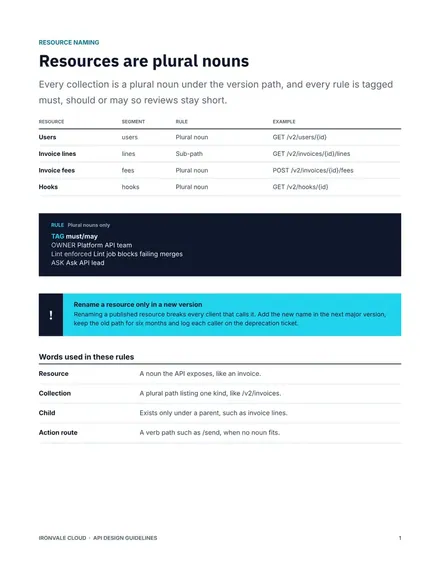
API Design Guidelines
Docs + Word8 pages
Free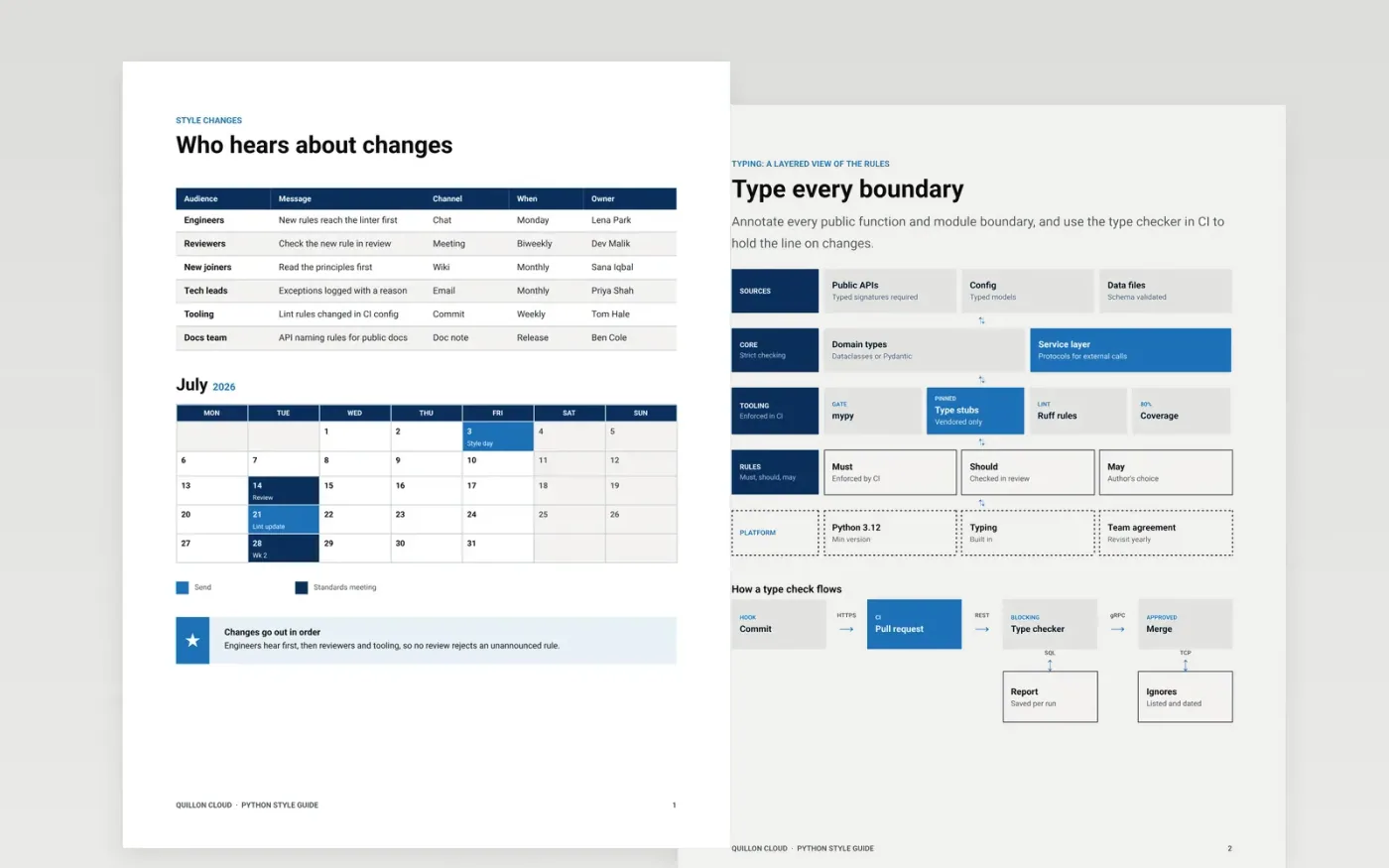
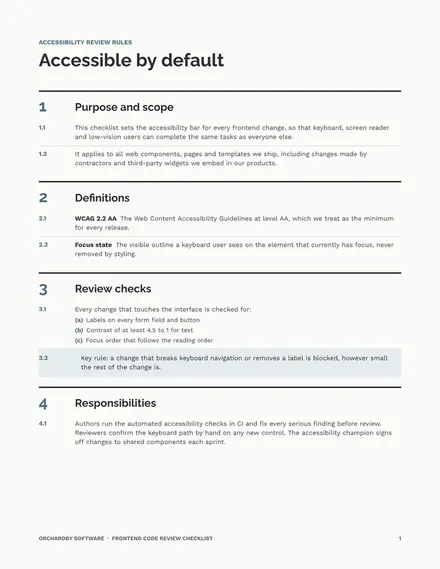
Python code looks different from one team to the next, and reviews drift into arguments about taste rather than design. This coding standards template builds on PEP 8 and adds the rules a team needs in practice: typing, packaging, docstrings and tests. Each rule is tagged must, should or may, shows a short example and says whether tooling enforces it, so review time goes to correctness.
The sample is for Quillon Cloud, a fictional platform team, with rules for formatting, typing, releases, docstrings and tests, and a release process that builds only from tags. Replace the rules, examples and tool links with your own repository's standards, and delete any section that does not apply to your language or framework. Name an owner who can accept changes.
Click Make a copy in Google Docs, then confirm on the Google page. The copy is saved to your own Google Drive.
Delete the rules that do not apply to your language, and mark each remaining rule must, should or may.
Replace the sample examples with real before-and-after code from your own repository.
Add the linter and formatter configuration links, and name an owner for the guide.
Delete the guide page, then share the standard with the team or present it from Google Docs.
No. Quillon Cloud, its engineers, the release process, the coverage figures, the example code and every rule are fictional sample data. Replace them with your own standards before you ask the team to adopt them.
Mark a rule must only when a tool or a clear risk enforces it. Use should for a strong default that reviewers check, and may for a choice the author can make. Too many musts makes all of them easier to ignore.
Fix the new code, and log the old code as a known exception with a date to remove it. Changing the standard needs a proposal with an example and an owner's sign-off, not a quiet edit.
More Google Docs templatesMore developer workflows templates
Docs + Word8 pages
Free
Docs + Word8 pages
Free
Slides + PowerPoint11 slides
Free