On-Call Handbook
Docs + Word8 pages
Free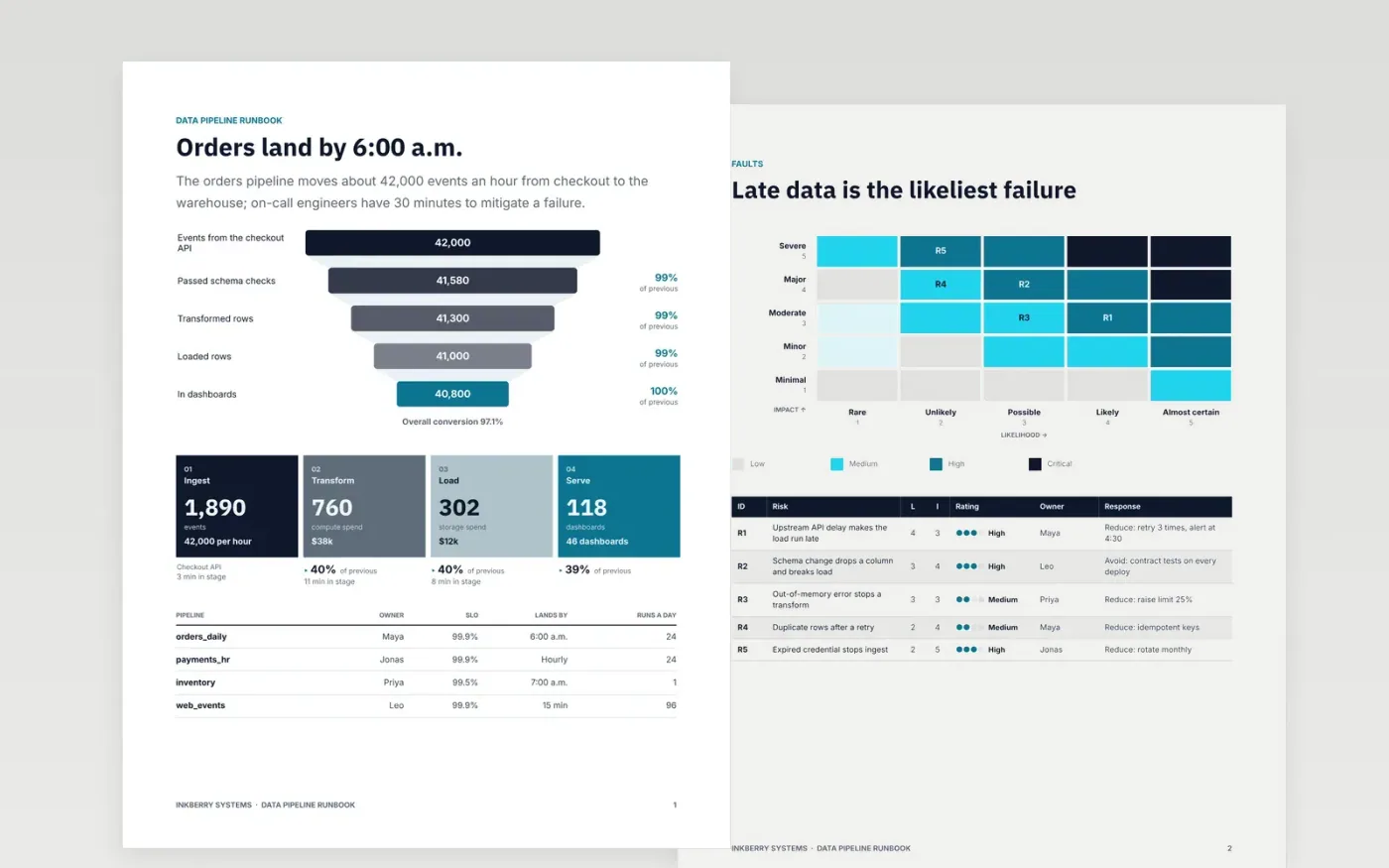
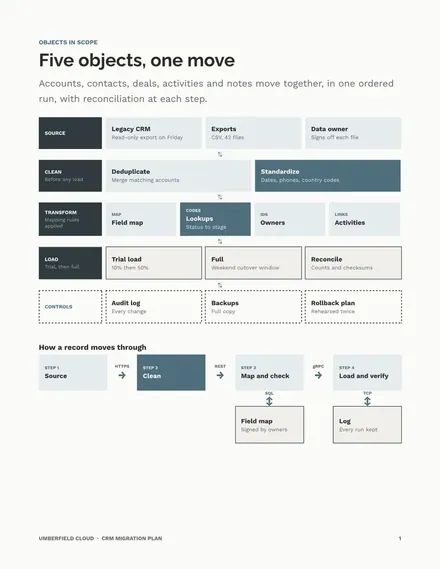
When a nightly load fails at 3 a.m., the engineer on call needs the pipeline map, the likely causes and the exact command, not a design essay. This runbook is organised in that order: a pipeline overview with service levels, a ranked failure register, a rerun procedure, a backfill architecture and a backfill command.
The sample follows Inkberry Systems, a fictional company whose orders pipeline moves about 42,000 events an hour and must land by 6:00 a.m. It shows commands with parameters, expected output and stop conditions. Replace the pipeline names, owners, commands and numbers with your own, run each in staging, then delete the guide page.
Click Make a copy in Google Docs, then confirm on the Google page. The copy is saved to your own Google Drive.
Replace the pipeline names, owners and service levels on the first page, and rebuild the funnel from your own volumes.
Update the failure register with the failures your team has really seen, then run each command in staging and paste the real output.
Check the backfill architecture and batch limits against your platform, and add the runbook link to every alert.
Delete the guide page, then share the runbook with your on-call rotation.
Yes. It is a free Google Docs template. Make a copy to your own Drive, edit each page and share it with your on-call rotation.
No. Inkberry Systems, the pipelines, the inkctl commands and every figure are fictional sample content. Replace them with your own tooling and test each command in staging.
Yes. Cut the service level table to one row, keep the failure register to the failures you have seen and keep only the rerun and backfill procedures you actually use.
More Google Docs templatesMore developer workflows templates
Docs + Word8 pages
Free
Docs + Word7 pages
Free
Docs + Word8 pages
Free