Engineering RFC
Docs + Word8 pages
Free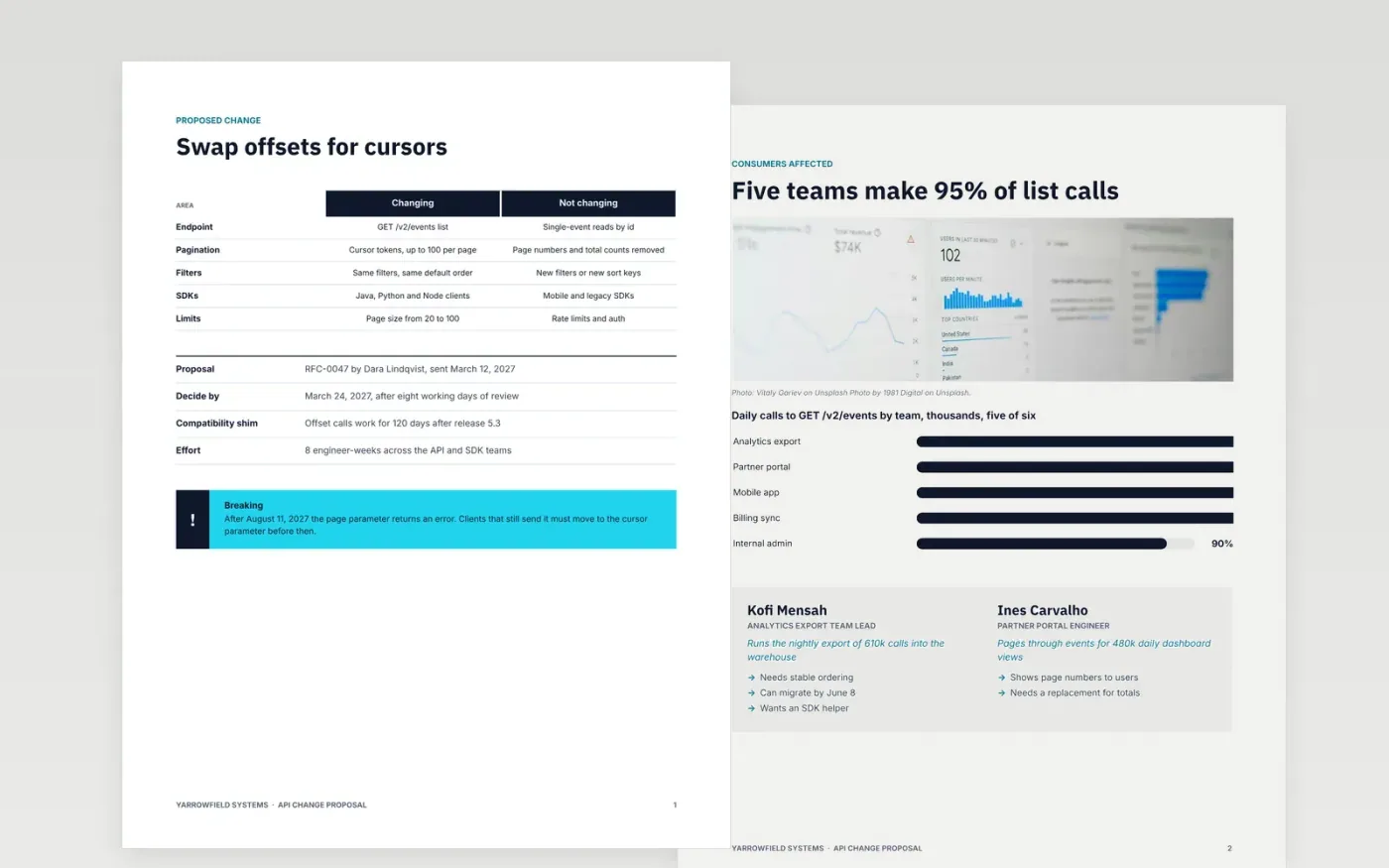
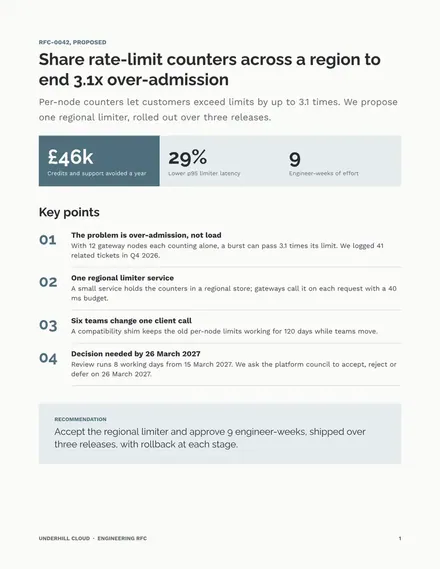
A change to a public API fails when consumers learn about it from a broken build. This proposal puts the change, the people it affects and the way old calls keep working in front of reviewers before anyone writes code. It runs from scope, through consumers and a compatibility reference, to migration gates and a dated timeline.
The sample is RFC-0047 from Yarrowfield Systems: replace offset pagination on the events list with cursors, cutting p95 latency from 840 ms to 590 ms. Six teams are affected, a shim keeps old calls working for 120 days, and the decision is due March 24, 2027. Replace the endpoint, teams, figures and dates with your own.
Click Make a copy in Google Docs, then confirm on the Google page. The copy is saved to your own Google Drive.
Set the RFC number, author and decide-by date, then rewrite the scope so a reader can accept or object after one page.
List the teams and calls affected, notify their leads before circulating, and document the old and new call with parameters.
Set the migration gates, the shim length and the removal date, and record each objection with your response.
Delete the guide page, share the RFC and mark the final status as accepted, rejected or deferred once decided.
Five to ten working days is typical. The sample gives eight, from March 12 to March 24, 2027, with a written cutoff for objections so the decision date does not drift.
Between 90 and 180 days is common. The sample keeps old offset calls working for 120 days across three releases, with a warning header added at the midpoint.
No. Yarrowfield Systems, its people, the RFC and every figure and date are fictional sample data. Replace them with your own details before you circulate a proposal.
More Google Docs templatesMore developer workflows templates
Docs + Word8 pages
Free
Slides + PowerPoint11 slides
Free
Docs + Word7 pages
Free