Reading Log
Docs + Word3 pages
Free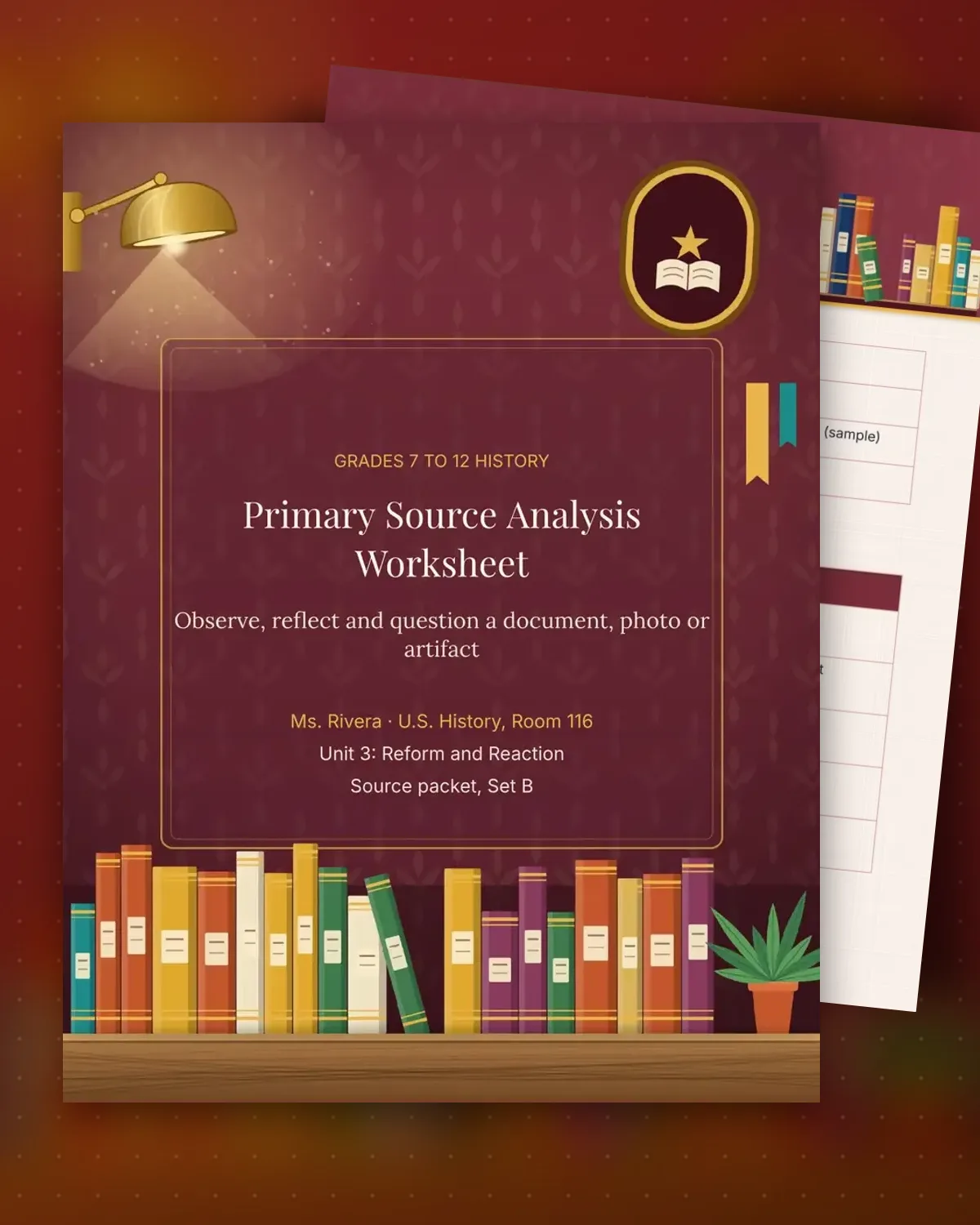
A primary source is a document, image or object made during the time it describes, and students often read it too quickly. This worksheet slows the reading with a source details box and an observation table. Students describe what they see before they interpret it. The sample is a 1910 photograph of child workers in a textile mill.
The second page moves from description to interpretation. Students answer questions about what the source tells them, what it leaves out and who made it for what purpose, then add context notes about the period and any second source that agrees or disagrees. A closing question prompt invites students to think like historians. Use it for a document packet, a museum visit or a single photo.
Make a copy in Google Docs, or download the Word file.
Type over the sample text with your own details.
Delete the guide page when you are done.
Print it, or save it as a PDF.
Letters, diaries, photographs, posters, speeches, maps and artifacts made at the time are primary sources. Later books and textbooks are secondary sources.
Describing what you see first keeps students from jumping to conclusions. The reflection then builds on details they can point to.
Yes. Students can complete the observation table on site, then finish the context and reflection sections in class.
Docs + Word3 pages
Free
Docs + Word3 pages
Free
Docs + Word3 pages
Free
Docs + Word3 pages
Free
Docs + Word3 pages
Free
Docs + Word3 pages
Free
Docs + Word3 pages
Free
Docs + Word3 pages
Free
Docs + Word3 pages
Free
Docs + Word3 pages
Free
Docs + Word3 pages
Free
Docs + Word3 pages
Free
Docs + Word3 pages
Free
Docs + Word3 pages
Free
Docs + Word3 pages
Free