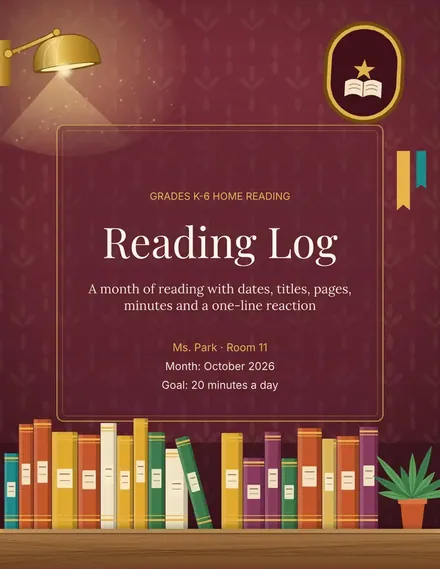
Reading Log
Docs + Word3 pages
Free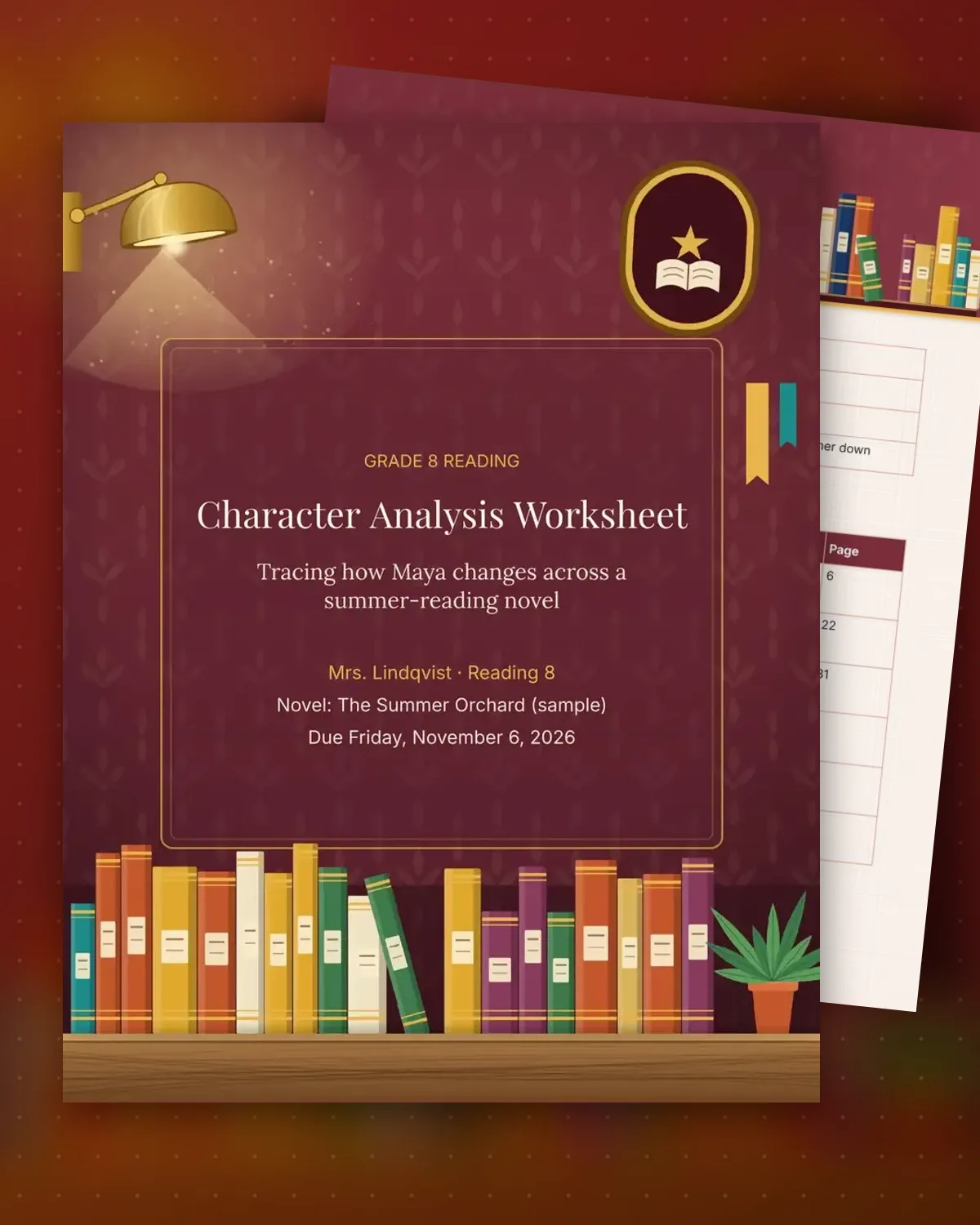
Character analysis asks students to explain why a person in a story acts the way they do, using evidence from the text rather than guesses. This worksheet starts with a basic profile, then moves to a trait table where every trait needs a quote or event and a page number. The sample follows a fourteen-year-old narrator in a summer-reading novel, but the same grid works for any fiction or memoir.
The second page looks at motives, relationships and change. Students list what the character wants, the reason behind each want and the text that shows it. A closing paragraph asks them to compare the first chapter with the last, which is where most strong essays come from. Use the page for a class discussion, a literature circle or a written response on a test.
Make a copy in Google Docs, or download the Word file.
Type over the sample text with your own details.
Delete the guide page when you are done.
Print it, or save it as a PDF.
It suits middle and high school reading classes. Younger readers can work with a short story and fewer rows.
Page numbers make every trait checkable. A teacher or classmate can find the evidence quickly and confirm the claim.
Yes. Replace the page column with a scene or timestamp and the rest of the layout still works.
Docs + Word3 pages
Free
Docs + Word3 pages
Free
Docs + Word3 pages
Free
Docs + Word3 pages
Free
Docs + Word3 pages
Free
Docs + Word3 pages
Free
Docs + Word3 pages
Free
Docs + Word3 pages
Free
Docs + Word3 pages
Free
Docs + Word3 pages
Free
Docs + Word3 pages
Free
Docs + Word3 pages
Free
Docs + Word3 pages
Free
Docs + Word3 pages
Free
Docs + Word3 pages
Free