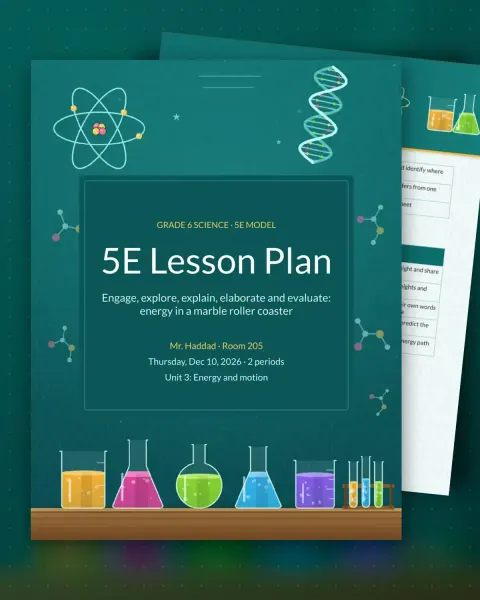
5E Lesson Plan
Docs + Word3 pages
Free30 templates
Docs + Word3 pages
Free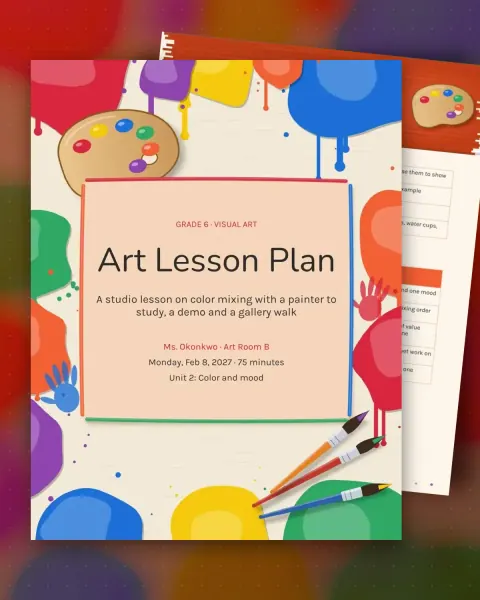
Docs + Word3 pages
Free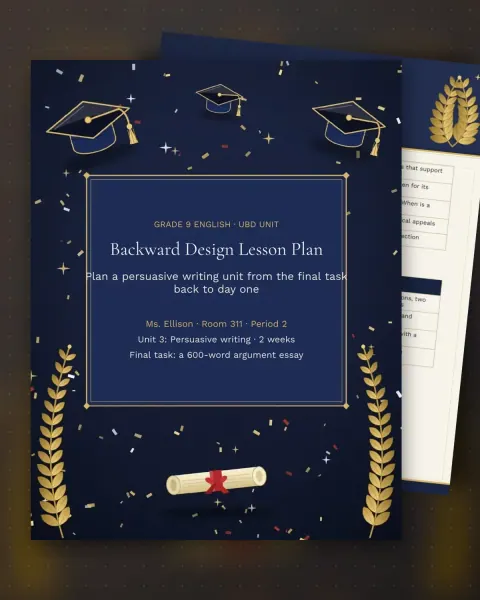
Docs + Word3 pages
Free
Docs + Word3 pages
Free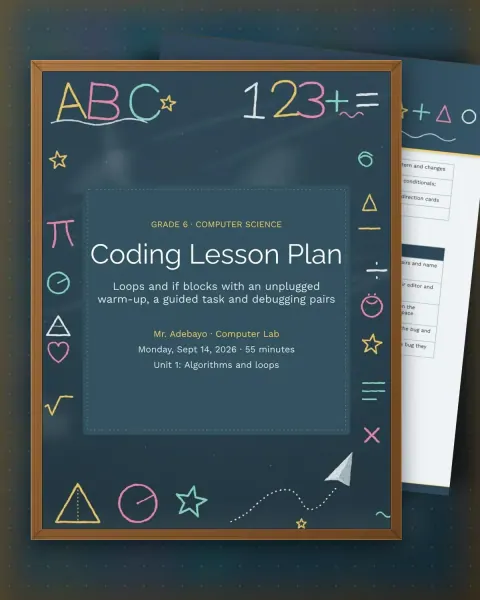
Docs + Word3 pages
Free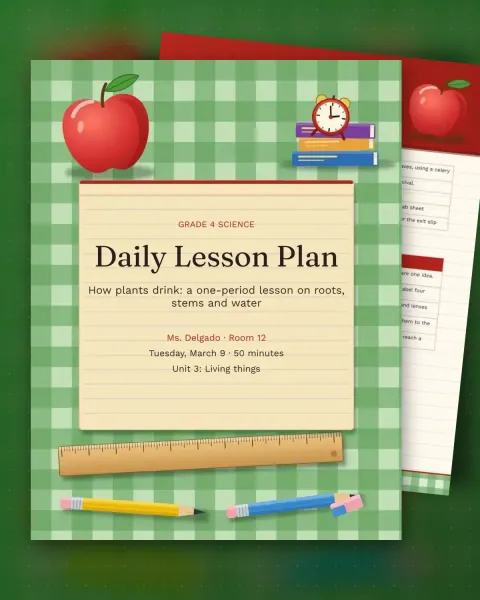
Docs + Word3 pages
Free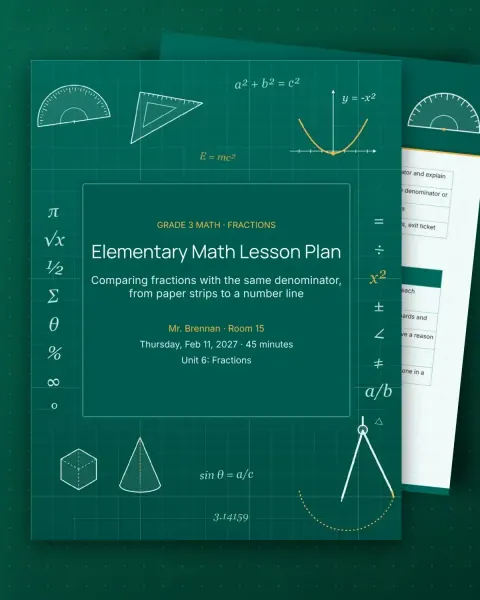
Docs + Word3 pages
Free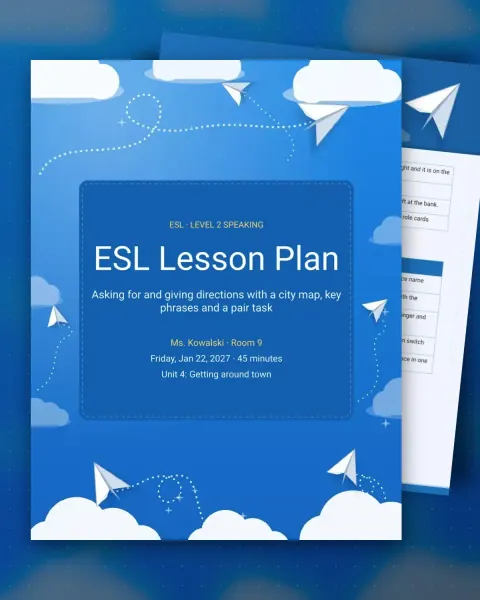
Docs + Word3 pages
Free
Docs + Word3 pages
Free
Docs + Word3 pages
Free
Docs + Word3 pages
Free
Docs + Word3 pages
Free
Docs + Word3 pages
Free
Docs + Word3 pages
Free
Docs + Word3 pages
Free
Docs + Word3 pages
Free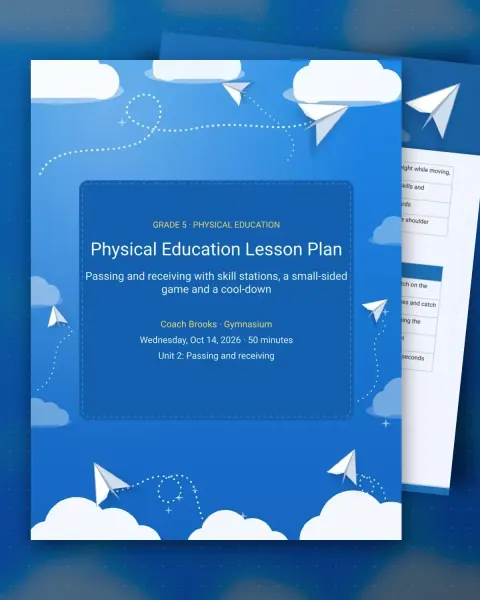
Docs + Word3 pages
Free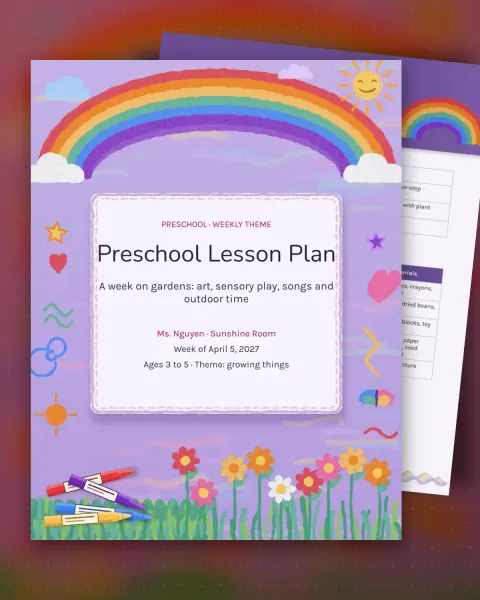
Docs + Word3 pages
Free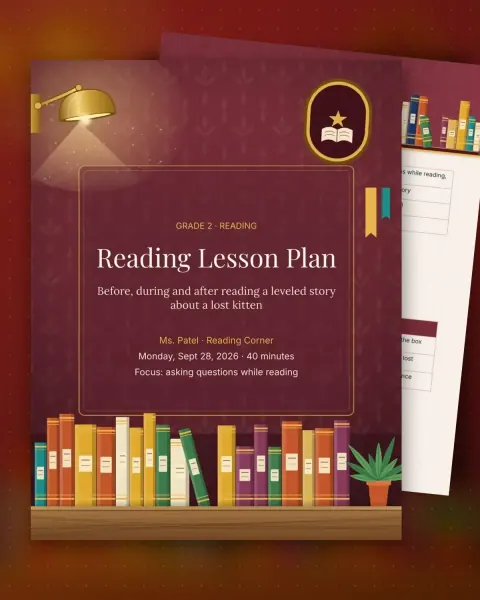
Docs + Word3 pages
Free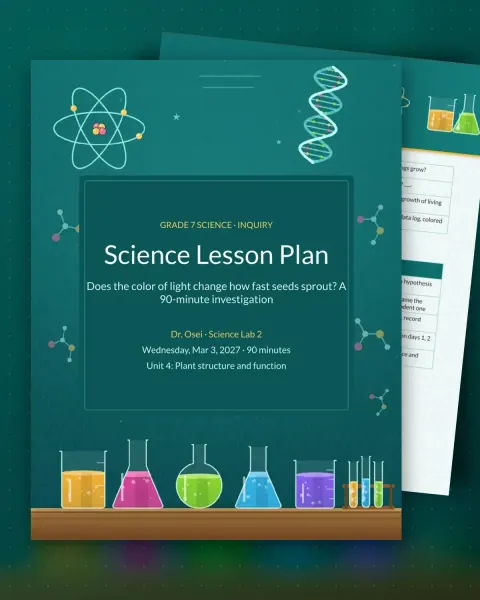
Docs + Word3 pages
Free
Docs + Word3 pages
Free
Docs + Word3 pages
Free
Docs + Word3 pages
Free
Docs + Word3 pages
Free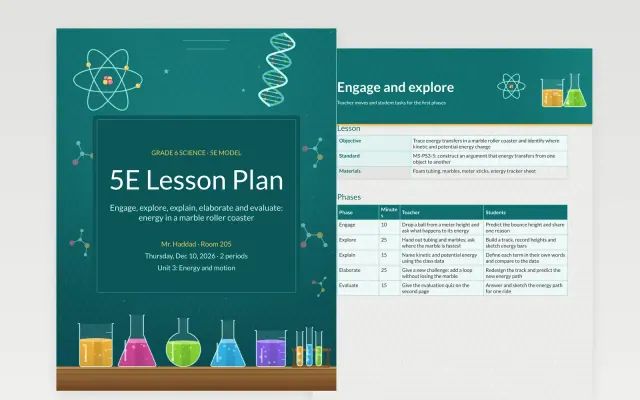 5E Lesson Plan | 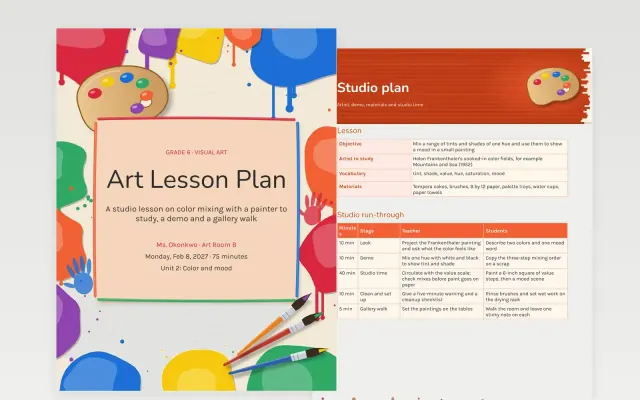 Art Lesson Plan | 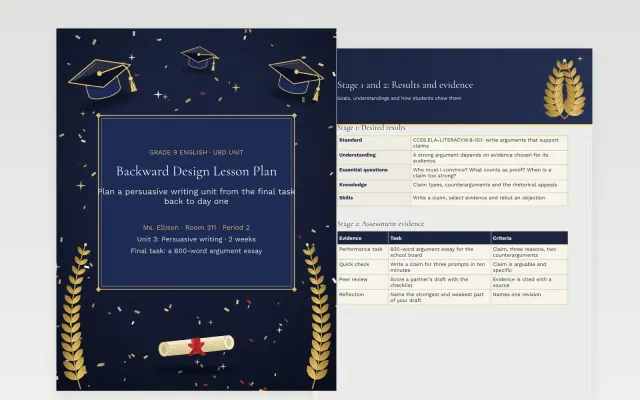 Backward Design Lesson Plan | 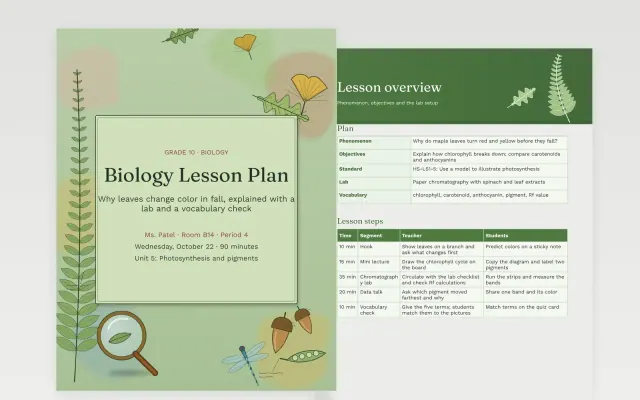 Biology Lesson Plan | |
|---|---|---|---|---|
| Format | Document | Document | Document | Document |
| Works in | Google Docs and Word | Google Docs and Word | Google Docs and Word | Google Docs and Word |
| Length | 3 pages | 3 pages | 3 pages | 3 pages |
| Style | Friendly | Bold | Editorial | Friendly |
A lesson plan is a teacher's map for one class period or a short run of them: what students should learn, how the time is spent, what materials are needed and how you will know it worked. Teachers write them to pace a lesson, to share with a co-teacher or substitute, and to show an observer how activities tie to a standard. Daily plans cover a single period; weekly and unit plans show the bigger sequence.
Cover the learning objective in student-friendly words, the standard it addresses, materials and room set-up, timed steps for the teacher and for students, differentiation for students who need support or a stretch, a check for understanding, such as an exit ticket, and homework and a note to reflect on afterward.
Write the objective and the exit ticket first, then plan the steps that get students from one to the other. If an activity does not help them answer the exit ticket, cut it.
Compare 5E Lesson Plan, Art Lesson Plan, and Backward Design Lesson Plan, all 3 pages long, then pick the closest match and replace the sample text with your own.
A lesson plan is a teacher's map for one class period or a short run of them: what students should learn, how the time is spent, what materials are needed and how you will know it worked. Teachers write them to pace a lesson, to share with a co-teacher or substitute, and to show an observer how activities tie to a standard. Daily plans cover a single period; weekly and unit plans show the bigger sequence.
Include the learning objective in student-friendly words, the standard it addresses, materials and room set-up, timed steps for the teacher and for students, differentiation for students who need support or a stretch, a check for understanding, such as an exit ticket, and homework and a note to reflect on afterward. Write the objective and the exit ticket first, then plan the steps that get students from one to the other. If an activity does not help them answer the exit ticket, cut it.
Most plans have an objective, the standard, materials, an opening or warm-up, direct teaching, guided and independent practice, a closing check and homework. Many schools also ask for differentiation notes and vocabulary.
A daily plan usually fits on one or two pages. Weekly plans put five days side by side on one page, and unit plans run a few pages because they list every lesson in the sequence.
It is a science-friendly sequence of five stages: engage, explore, explain, elaborate and evaluate. Students meet a question first and investigate before the teacher explains the idea.
The day's schedule, the lesson for each period with materials ready to hand, class lists, helpful students, routines, emergency procedures and where to find things. Write it so someone who has never met the class can follow it.
Start with 5E Lesson Plan: Run a two-period energy lesson in five phases, with timed teacher moves, student tasks, a redesign challenge and a scored evaluation quiz. If that is not the right fit, compare it with Art Lesson Plan.
Yes. These lesson plan templates work in Google Docs and Microsoft Word. All 30 templates are free, with no account or email needed.
Mostly education and research. The sample text in each one is written for a specific situation, so replace it with your own details.