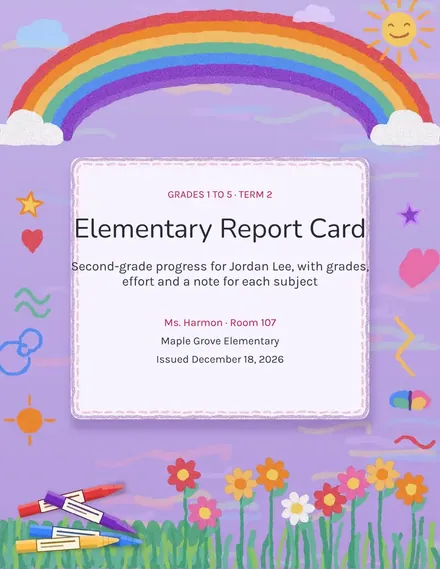
Elementary Report Card
Docs + Word3 pages
Free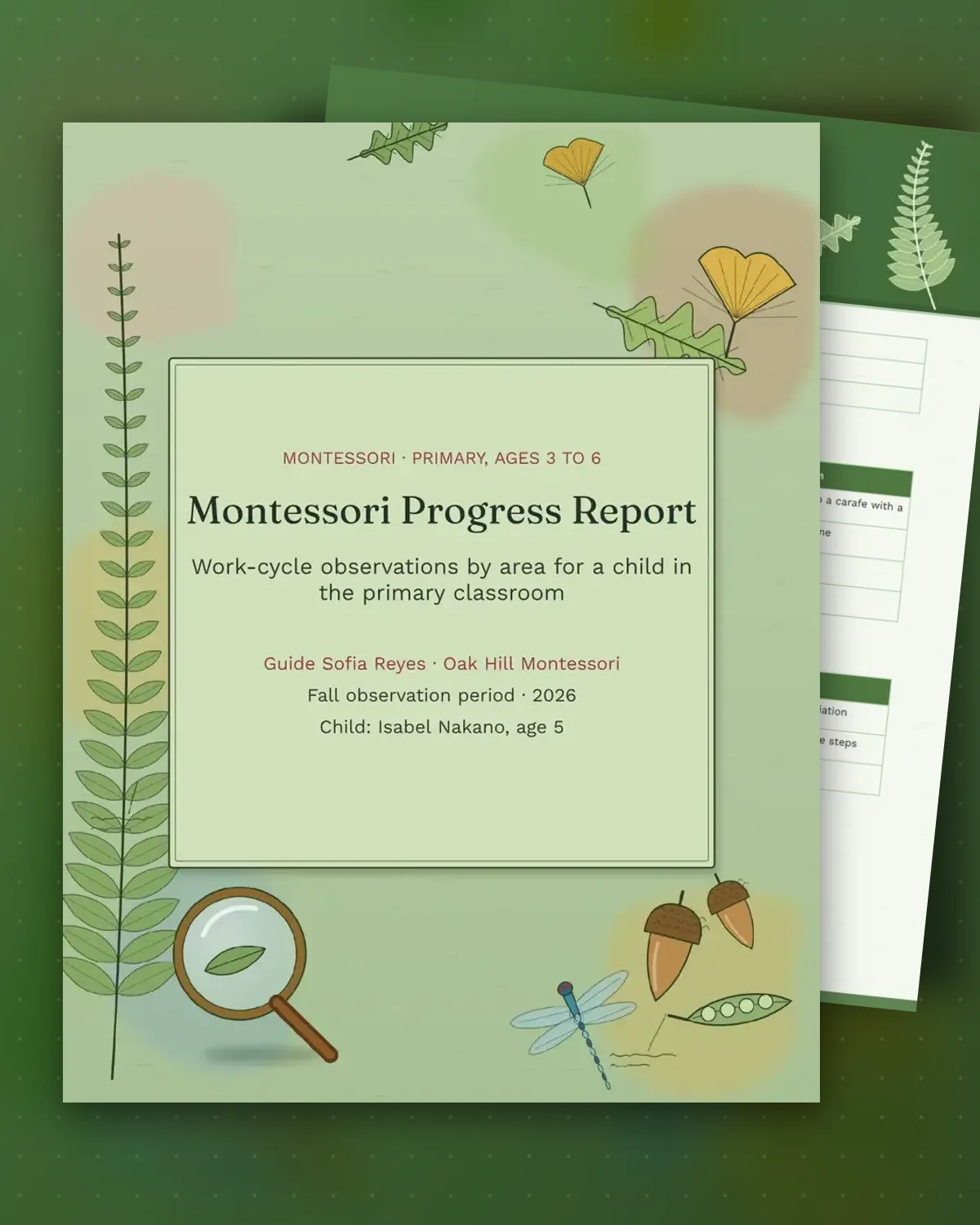
Montessori guides observe children at work rather than grading tests, so the report is built around work areas. Each row names the material, what the child did during the work cycle and the presentation planned next. The example covers a child of five in the primary room this fall, with practical life and sensorial work on the first page.
Page two covers language, math and culture, then closes with a narrative paragraph. Narrative notes describe concentration, choices and curiosity in plain sentences that a parent can follow. Adjust the material names to match your classroom's shelves, and keep one observation per row so the record stays easy to scan.
Make a copy in Google Docs, or download the Word file.
Type over the sample text with your own details.
Delete the guide page when you are done.
Print it, or save it as a PDF.
It fits any Montessori program for children ages 3 to 6. Change the work names to match the materials in your own classroom.
Many guides record notes weekly and summarize them each term. Use the table for the current period, and keep older notes in the child's file.
Montessori reports describe what the child is working on and what comes next, which is more useful to families and to the next guide than a score.
Docs + Word3 pages
Free
Docs + Word3 pages
Free
Docs + Word3 pages
Free
Docs + Word3 pages
Free
Docs + Word3 pages
Free
Docs + Word3 pages
Free
Docs + Word3 pages
Free
Docs + Word3 pages
Free
Docs + Word3 pages
Free
Docs + Word3 pages
Free
Docs + Word3 pages
Free
Docs + Word3 pages
Free
Docs + Word3 pages
Free
Docs + Word3 pages
Free
Docs + Word3 pages
Free