Essay Rubric
Docs + Word3 pages
Free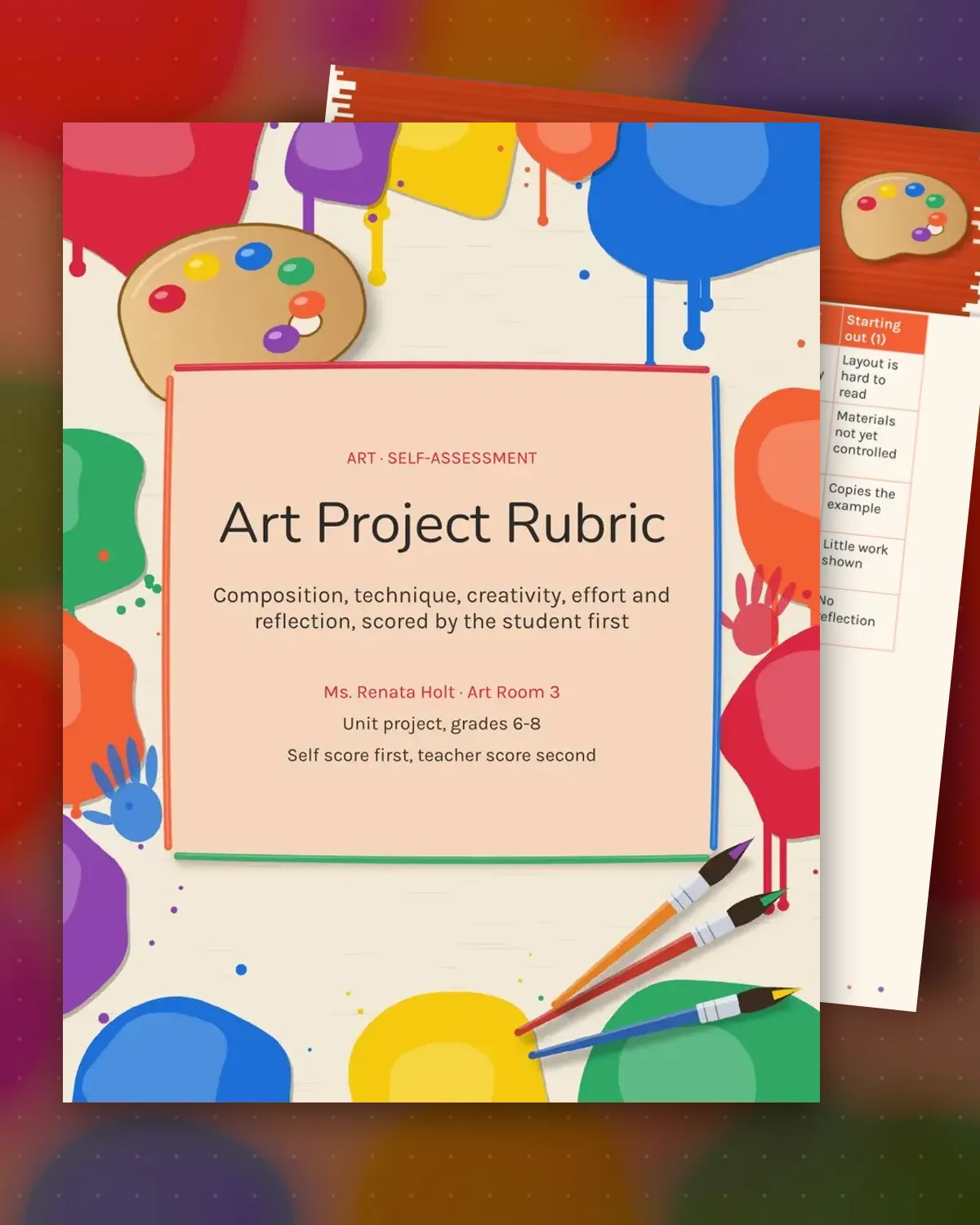
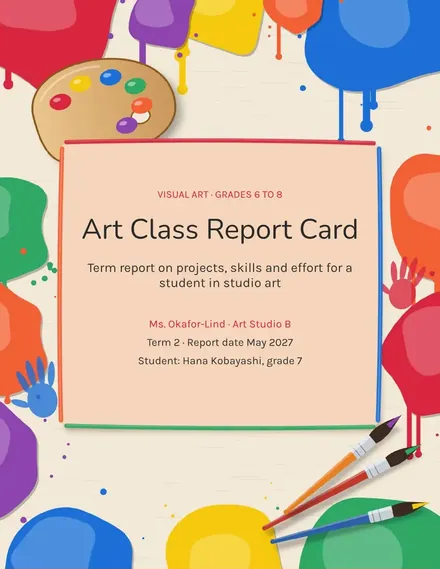
Art grades are easier to explain when students have already named what they did well. This rubric asks for a self-score on five criteria first, then a teacher score after the critique, so both views appear on the same sheet. Each level describes what the work looks like, from a strong design with a clear focal point to a starting attempt.
The reflection page asks three questions a student can answer in a few sentences, followed by a blank answer table for longer notes. Teachers can use the same grid for paintings, prints, sculpture or digital work by changing the materials in the technique row. Keep the points out of view until the reflection is done.
Make a copy in Google Docs, or download the Word file.
Type over the sample text with your own details.
Delete the guide page when you are done.
Print it, or save it as a PDF.
A self-score makes students look closely at their choices before the teacher speaks. The teacher score then shows where the two views match and where they differ.
Yes. The technique row is written in general terms, so it fits drawing, painting, printmaking, clay or digital art with minor changes to the wording.
The sample scores five areas from one to four, for a total out of twenty. Change the scale if your grade book uses a different total.
Docs + Word3 pages
Free
Docs + Word3 pages
Free
Docs + Word3 pages
Free
Docs + Word3 pages
Free
Docs + Word3 pages
Free
Docs + Word3 pages
Free
Docs + Word3 pages
Free
Docs + Word3 pages
Free
Docs + Word3 pages
Free
Docs + Word3 pages
Free
Docs + Word3 pages
Free
Docs + Word3 pages
Free
Docs + Word3 pages
Free
Docs + Word3 pages
Free
Docs + Word3 pages
Free