Simple CV
Docs + Word1 page
Free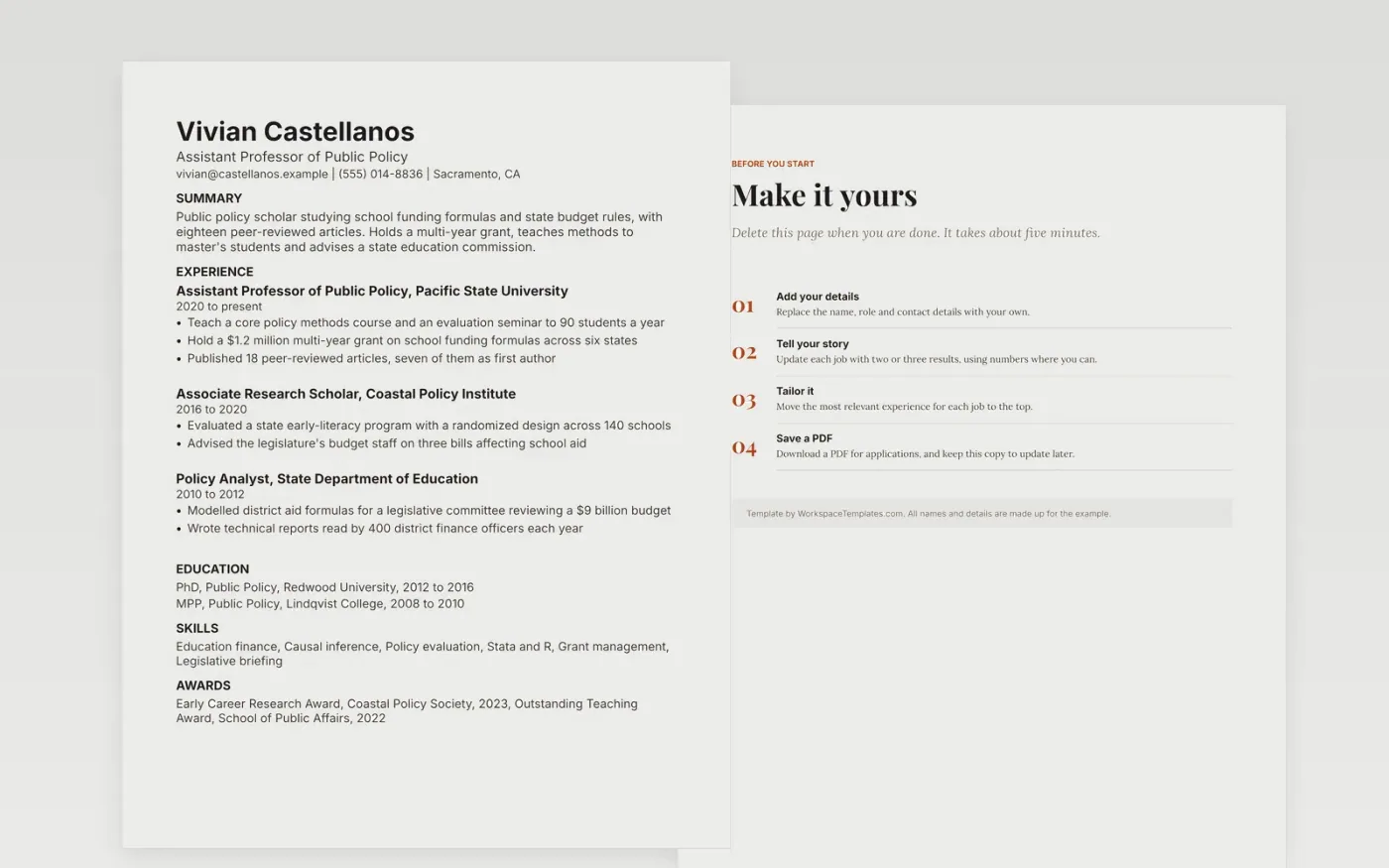
Search committees for tenure-track posts look for a researcher who will win grants, publish steadily and teach well enough to earn tenure. They weigh first-author articles, the size and source of funding, invited talks and evidence of student success in courses and supervision. Senior candidates also show service and policy engagement. Many universities send applications through tracking software first, so this layout keeps headings plain, dates standard and columns absent. Each section is ordered by weight, with funding and articles ahead of teaching.
The sample candidate is an assistant professor of public policy who studies school funding, with eighteen articles and a multi-year grant behind her. Enter your own grants, articles and awards, and keep publication counts accurate by status. Practical tip: for each grant, give the funder, the total amount and your role as principal or co-investigator, since committees check these claims. Add a teaching load line for each year so the workload is easy to compare with other candidates.
Make a copy in Google Docs, or download the Word file.
Type over the sample text with your own details.
Delete the guide page when you are done.
Print it, or save it as a PDF.
Most tenure-track CVs run between six and twelve pages once publications are complete. Keep the front sections focused on recent articles, grants and teaching. The full publication list can be a longer appendix. Check the job advertisement, since some departments ask for a shorter version. Clear headings and dates help committee members who read dozens of files in a single week.
Generally no, since the CV lists funded work. Unfunded applications can go in a cover letter when they show the research direction you are building. Some committees ask for a list of submitted proposals, so check the instructions. Never list a grant as awarded until the funder has confirmed it in writing.
Group them under a separate heading with the status, such as under review or revise and resubmit. Give the venue and the year of submission, and list co-authors in the order they appear on the paper. Do not add a page range or volume until the article is in print. Committees are used to this format and will read the status line carefully.
Docs + Word1 page
Free
Docs + Word1 page
Free
Docs + Word1 page
Free
Docs + Word1 page
Free
Docs + Word1 page
Free
Docs + Word1 page
Free
Docs + Word1 page
Free
Docs + Word1 page
Free
Docs + Word1 page
Free
Docs + Word1 page
Free
Docs + Word1 page
Free
Docs + Word1 page
Free
Docs + Word1 page
Free
Docs + Word1 page
Free
Docs + Word1 page
Free