Simple CV
Docs + Word1 page
Free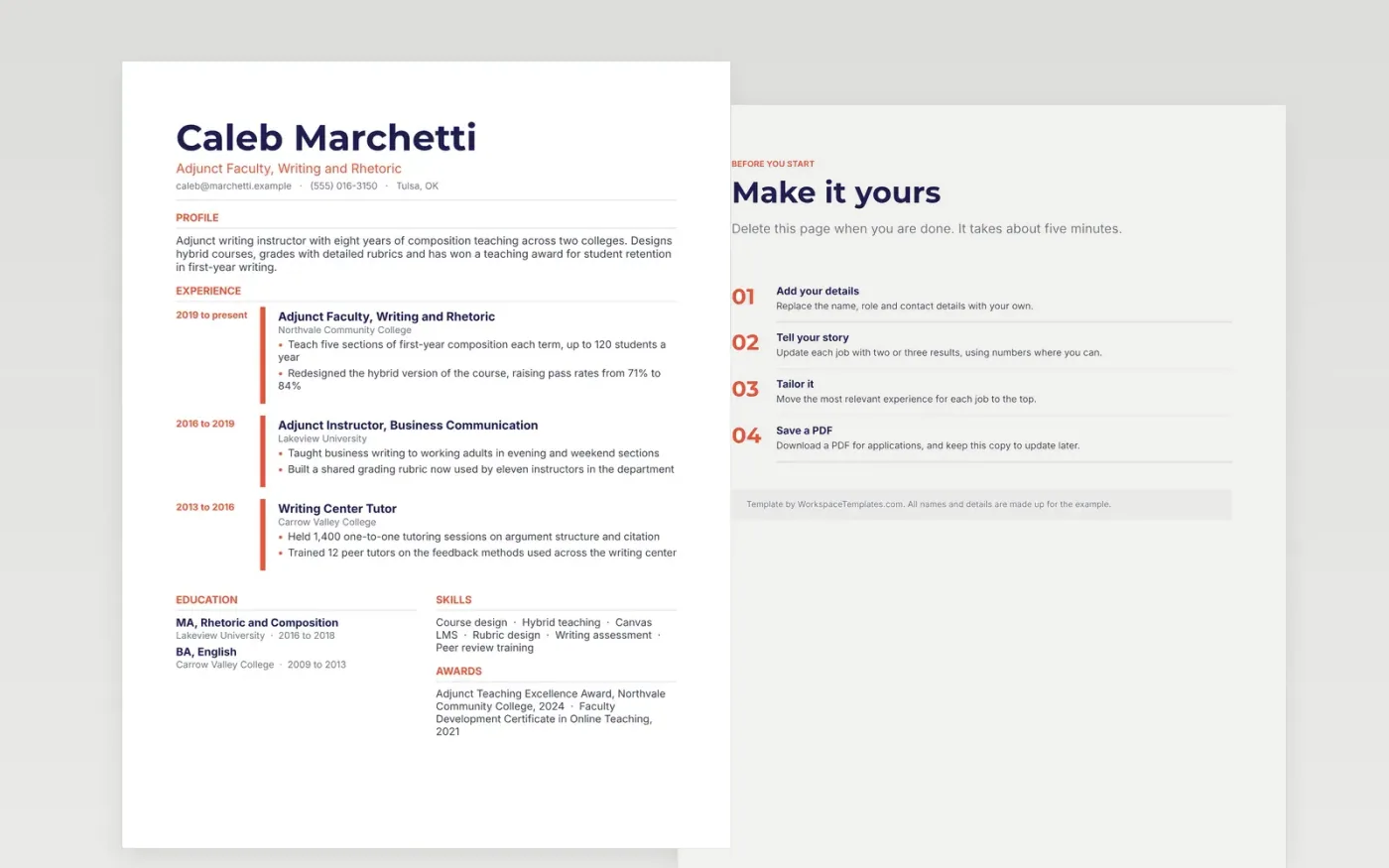
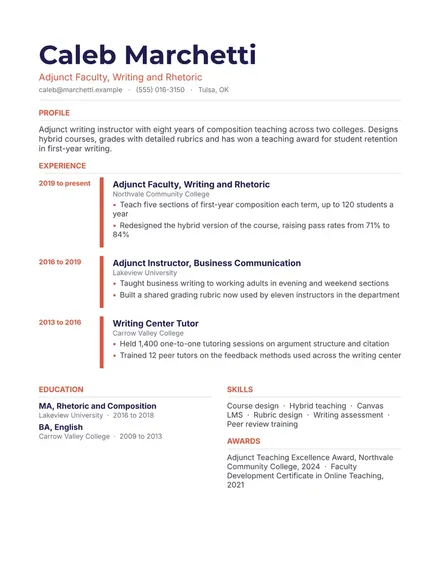
Department chairs hiring adjunct faculty in writing and rhetoric look for reliable teaching across several sections, comfort with the course management system and grading that stays consistent at scale. They value curriculum work such as redesigned courses, shared rubrics or mentoring other instructors. Writing center experience also counts, since it shows an instructor can explain a feedback process. A timeline layout fits this record because each campus and term gets its own step, so a chair can judge how steady the teaching has been.
The sample adjunct has taught first-year composition across two colleges for eight years and redesigned a hybrid version of the course. Swap in your own campuses, sections and dates, and give the enrolment and pass rates you can support. Practical tip: if you have taught online or hybrid, say so near the top, since many writing departments now need that experience. List your teaching award or development certificate in one short line each, so the record stays easy to scan.
Make a copy in Google Docs, or download the Word file.
Type over the sample text with your own details.
Delete the guide page when you are done.
Print it, or save it as a PDF.
Group courses by college and list the term, the course number and title, and the number of sections. Add the approximate enrolment for each term. If you taught online, hybrid or evening sections, name the format. Include any course you designed yourself with a short line about what you changed. A clean list of terms is easier for a chair to check than a long paragraph.
Many colleges require a master's degree in English, rhetoric and composition, or a related field with a set number of graduate credit hours. Some accept a bachelor's degree plus experience for specific courses. Check the requirements of each college, and list your degree and its field clearly at the top of the CV, with the institution and the year.
Name awards, development certificates and any course evaluation scores you are allowed to share. Describe a concrete change you made, such as a shared rubric or a new feedback routine, and its effect on pass rates or retention. Peer observations are useful if they came from a chair or senior colleague, with the date and the course observed.
Docs + Word1 page
Free
Docs + Word1 page
Free
Docs + Word1 page
Free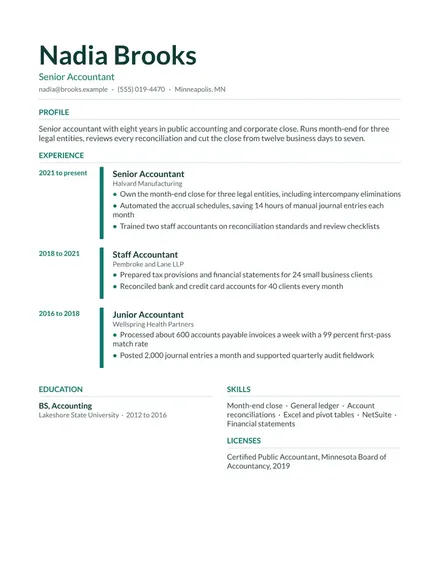
Docs + Word1 page
Free
Docs + Word1 page
Free
Docs + Word1 page
Free
Docs + Word1 page
Free
Docs + Word1 page
Free
Docs + Word1 page
Free
Docs + Word1 page
Free
Docs + Word1 page
Free
Docs + Word1 page
Free
Docs + Word1 page
Free
Docs + Word1 page
Free
Docs + Word1 page
Free