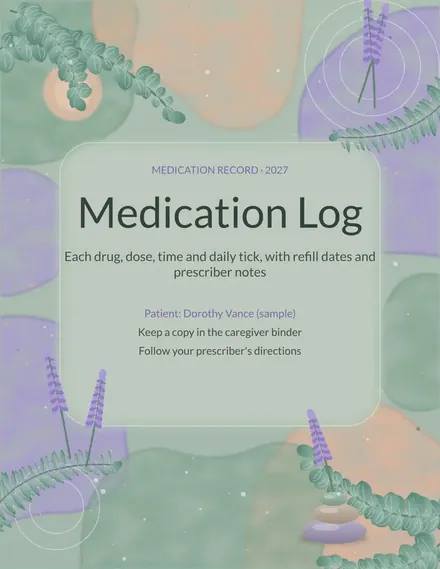
Medication Log
Docs + Word3 pages
Free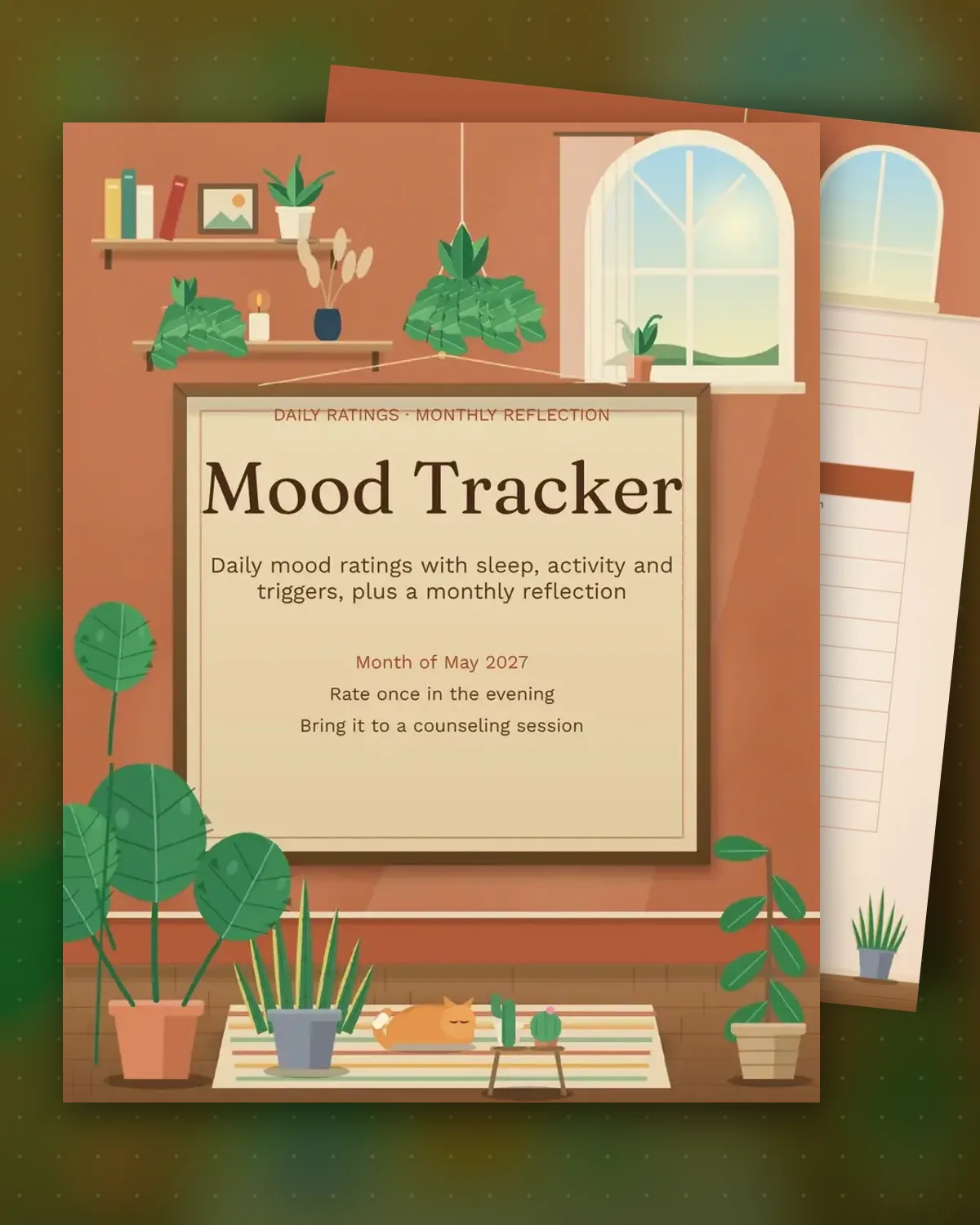
Mood changes are easier to understand when they are written down next to the things that happen around them. This tracker asks for one mood rating a day, with energy, sleep and activity beside it and a column for the trigger or note. Once the month closes, the reflection page helps you see what held steady and what shifted, so you can talk about it with someone you trust.
The sample follows a person in a demanding job whose mood dips after late nights and rises on days with a walk. The entries are invented. Choose a scale you can use every day and keep it the same. This tracker is for noticing, not diagnosing; if low mood or anxiety lasts for weeks, reach out to a doctor or counselor.
Make a copy in Google Docs, or download the Word file.
Type over the sample text with your own details.
Delete the guide page when you are done.
Print it, or save it as a PDF.
A one to ten scale works well. Use one for the lowest you feel and ten for the best, and rate at the same time each evening.
The sheet is designed for one person, but you can copy it for a child or partner who wants to track their own.
No. It logs what you notice and helps you talk about it. Only a qualified clinician can assess mood or mental health.
Docs + Word3 pages
Free
Docs + Word3 pages
Free
Docs + Word3 pages
Free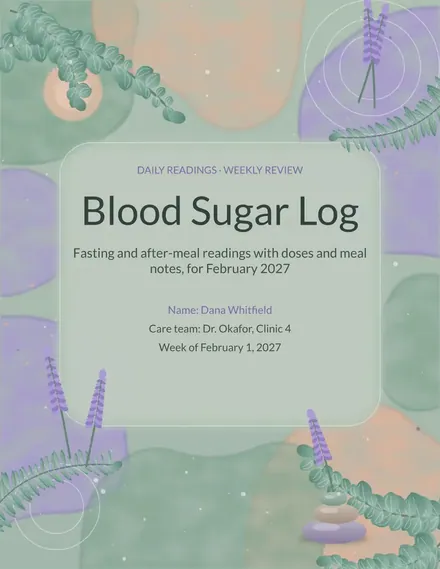
Docs + Word3 pages
Free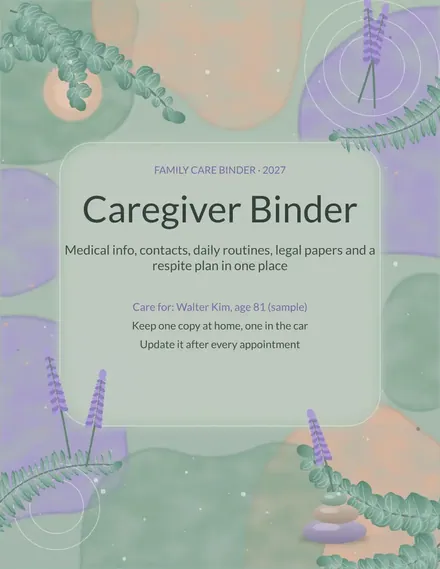
Docs + Word4 pages
Free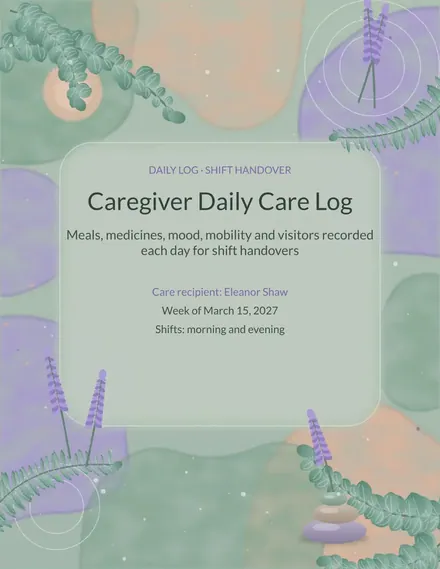
Docs + Word3 pages
Free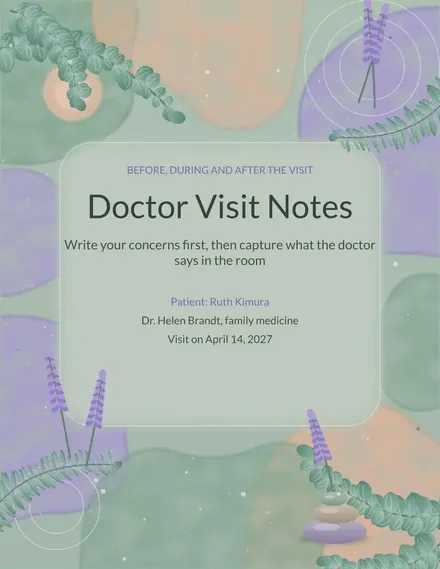
Docs + Word3 pages
Free
Docs + Word3 pages
Free
Docs + Word3 pages
Free
Docs + Word3 pages
Free
Docs + Word3 pages
Free
Docs + Word3 pages
Free
Docs + Word3 pages
Free
Docs + Word3 pages
Free