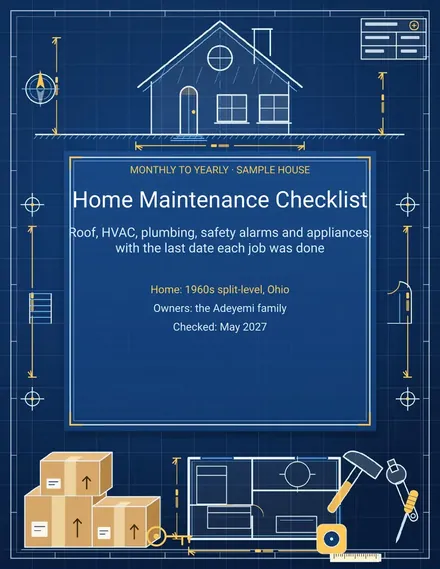
Home Maintenance Checklist
Docs + Word3 pages
Free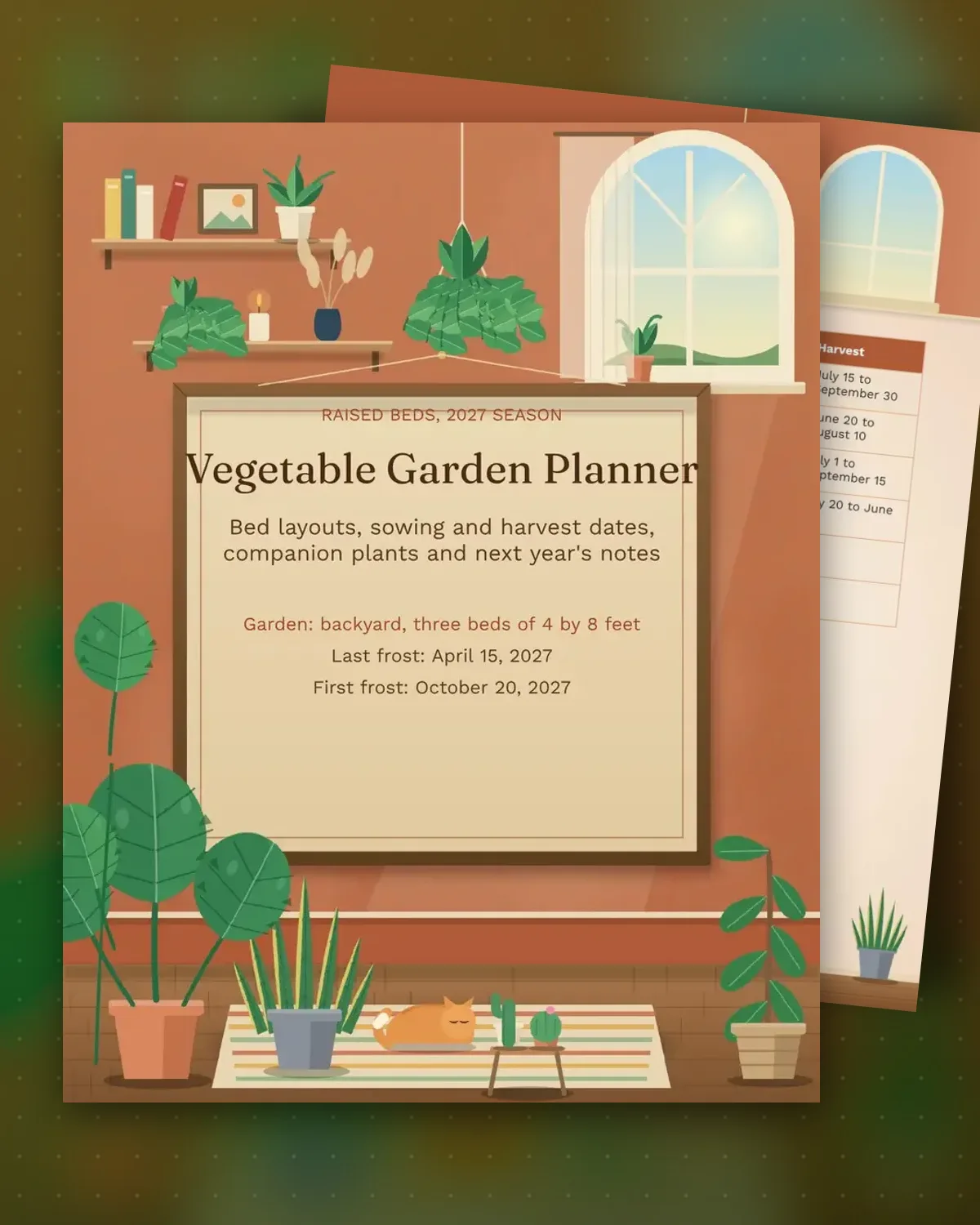
A vegetable garden is easier to run when the layout is on paper before the first seed goes in. Crops need different spacing, they flower and fruit at different times, and some plants do poorly beside others. A planner records each bed's crops, the sowing date for the season and the harvest window, so the timing of one bed does not clash with the next. The notes table then keeps the lessons, such as the blight that came in late August, so you do not repeat them.
The sample plans a small backyard with three raised beds, plus a fourth bed for cool-season greens, for the 2027 season. The first page sets out each bed with its crop, spacing, sowing date and harvest window. The second page lists companion pairs, the plants to keep apart and the problems seen last year, plus a few changes to make next season. Use the frost dates for your area and adjust the sowing dates to match.
Make a copy in Google Docs, or download the Word file.
Type over the sample text with your own details.
Delete the guide page when you are done.
Print it, or save it as a PDF.
Use the average last frost date for your area from your local extension office or a regional planting guide. Start indoors about six weeks before that date for warm-season crops.
Rotation breaks the cycle of soil pests and diseases that build up when the same family of plants grows in one spot year after year.
Use the spacing on the seed packet as the minimum. Crowded plants give smaller harvests and more disease, so thin the seedlings early.
Docs + Word3 pages
Free
Docs + Word3 pages
Free
Docs + Word3 pages
Free
Docs + Word3 pages
Free
Docs + Word3 pages
Free
Docs + Word3 pages
Free
Docs + Word3 pages
Free
Docs + Word3 pages
Free
Docs + Word3 pages
Free
Docs + Word3 pages
Free
Docs + Word3 pages
Free
Docs + Word3 pages
Free
Docs + Word3 pages
Free
Docs + Word3 pages
Free
Docs + Word3 pages
Free