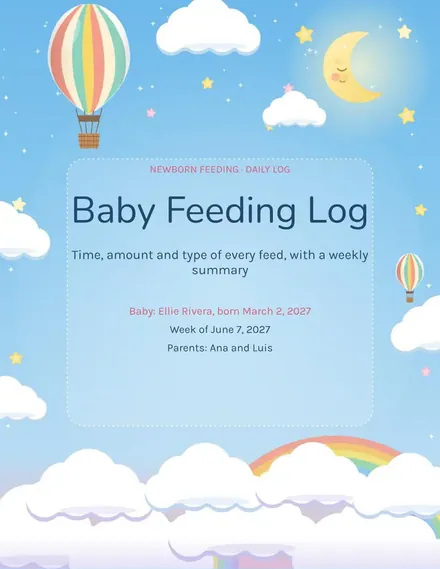
Baby Feeding Log
Docs + Word3 pages
Free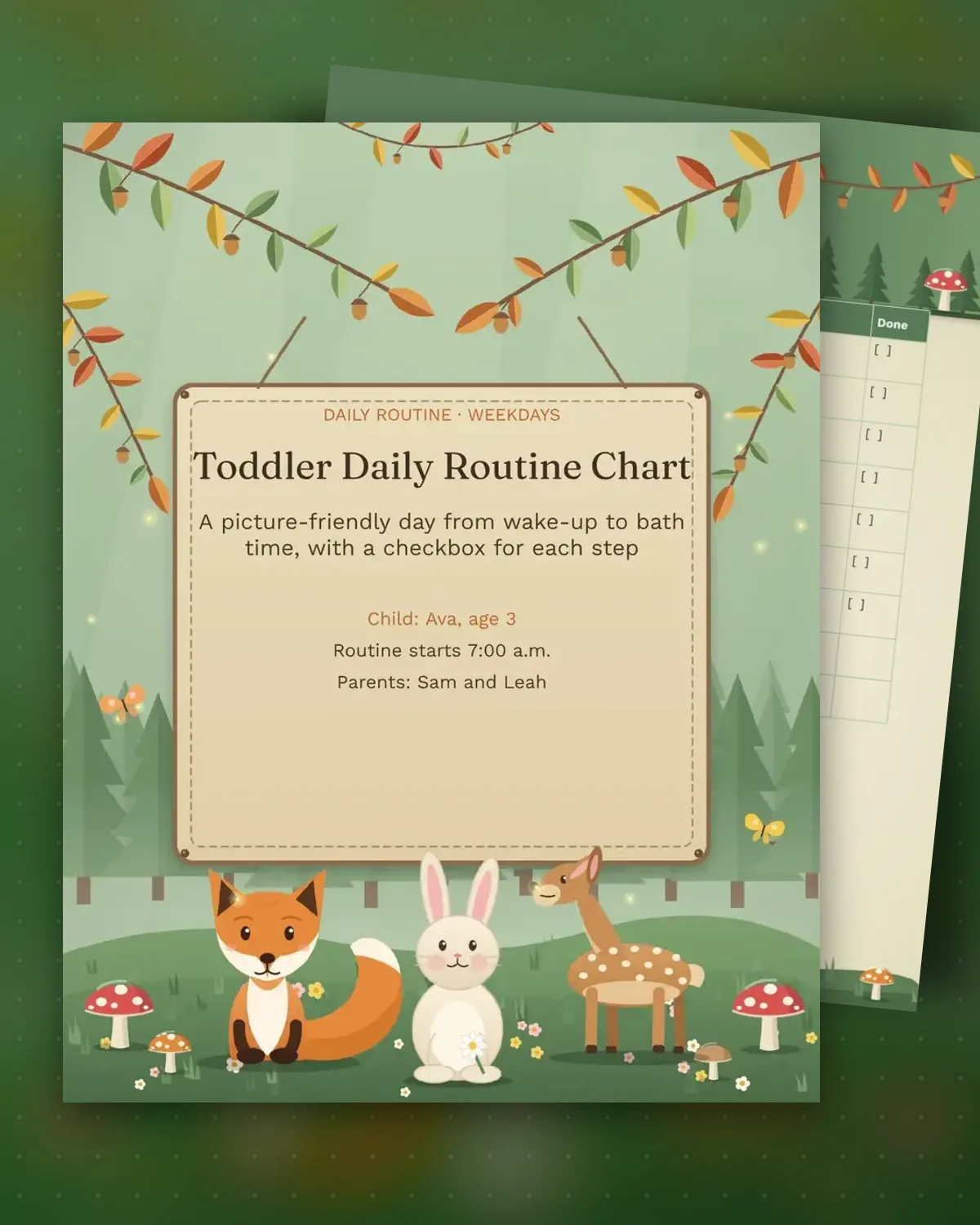
Toddlers do better when they know what comes next. A visual routine turns the day into short, named steps, such as breakfast, park, lunch, nap and bath, so a child can see the order instead of hearing the same reminders all day. Parents can post the page where the child can see it, then point to a picture when it is time to move on.
This sample follows a three-year-old named Ava through a weekday, from waking up to bedtime. Each row gives a time, the activity in plain words, a picture cue to match a sticker or drawing, and a box to tick once it is done. The second page covers quiet time and bedtime, with a short list of tips for transitions that go badly. Adjust the clock times to fit your schedule and keep the order the same from day to day.
Make a copy in Google Docs, or download the Word file.
Type over the sample text with your own details.
Delete the guide page when you are done.
Print it, or save it as a PDF.
Many families start around two years old, when children can follow simple pictures. Older kids can use the same chart with words only.
Move the times, not the order. Keeping the steps in sequence matters more than hitting the exact minute.
Yes. Paste a photo or drawing into the picture cue column, or leave the words for an older child.
Docs + Word3 pages
Free
Docs + Word3 pages
Free
Docs + Word3 pages
Free
Docs + Word3 pages
Free
Docs + Word3 pages
Free
Docs + Word3 pages
Free
Docs + Word3 pages
Free
Docs + Word3 pages
Free
Docs + Word3 pages
Free
Docs + Word3 pages
Free
Docs + Word3 pages
Free
Docs + Word3 pages
Free
Docs + Word3 pages
Free
Docs + Word3 pages
Free
Docs + Word3 pages
Free