Modern Resume
Docs + Word1 page
Free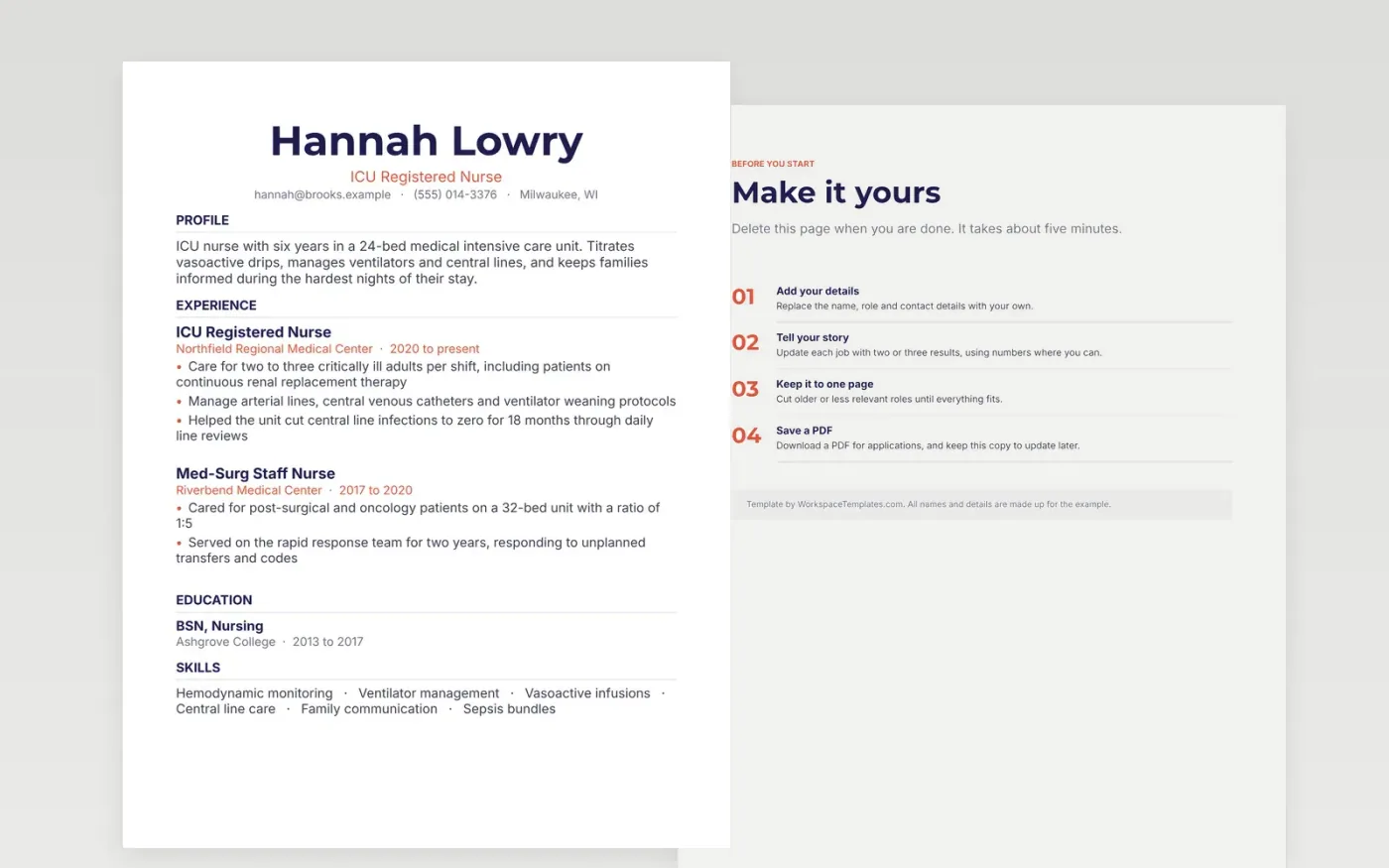
Hiring managers for ICU nurses weigh acuity above almost everything else. They want to know how many critically ill patients a nurse has carried per shift, which devices they manage without supervision, and whether they hold the CCRN. Unit-specific skills such as CRRT, prone positioning and arterial line care show readiness for the next step. This single column stacks those details in reading order, so the critical care section is the first thing a unit manager sees.
This sample nurse has six years in a medical ICU and spent two years on a medical-surgical floor before that. Replace the hospital, bed count and devices with the ones on your own unit, and keep every number ready for an interview. Practical tip: put your unit's bed count and nurse-to-patient ratio in the first job line, because ICU panels compare ratios before they read anything else. Remove skills you no longer use.
Make a copy in Google Docs, or download the Word file.
Type over the sample text with your own details.
Delete the guide page when you are done.
Print it, or save it as a PDF.
List the CCRN, issued by AACN, first, dated to the year you passed. Add ACLS and BLS cards from the American Heart Association, plus PALS if you have worked with children. Include any unit-specific competencies such as CRRT or ECMO training, but only if you completed them. Certifications with expiry dates should show the renewal status.
State the ratio you worked, such as one nurse to two patients, and how many patients you covered on a typical shift. Name the devices you managed independently, including ventilators, vasoactive drips and continuous renal replacement therapy. Add an outcome you measured, such as fewer line infections or faster weaning. Keep the numbers accurate, because interviewers ask about them.
Yes. A single column keeps the reading order simple for a unit manager who reviews many nurses quickly. It also reads well in applicant tracking systems, which parse text from top to bottom. Use clear section headings, avoid tables and keep the most relevant critical care job first. This format suits nurses whose strength is a long, steady record of acuity.
Docs + Word1 page
Free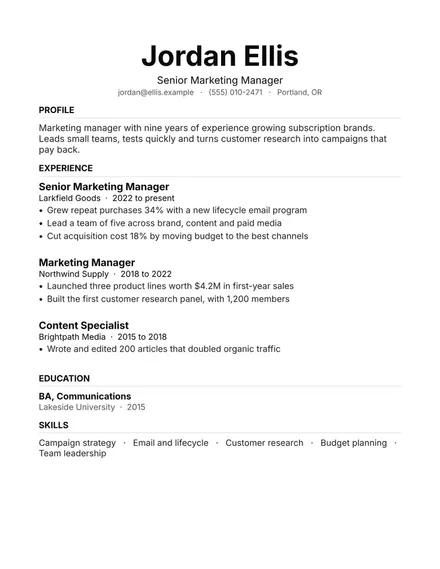
Docs + Word1 page
Free
Docs + Word1 page
Free
Docs + Word1 page
Free
Docs + Word1 page
Free
Docs + Word1 page
Free
Docs + Word1 page
Free
Docs + Word1 page
Free
Docs + Word1 page
Free
Docs + Word1 page
Free
Docs + Word1 page
Free
Docs + Word1 page
Free
Docs + Word1 page
Free
Docs + Word1 page
Free
Docs + Word1 page
Free