Modern Resume
Docs + Word1 page
Free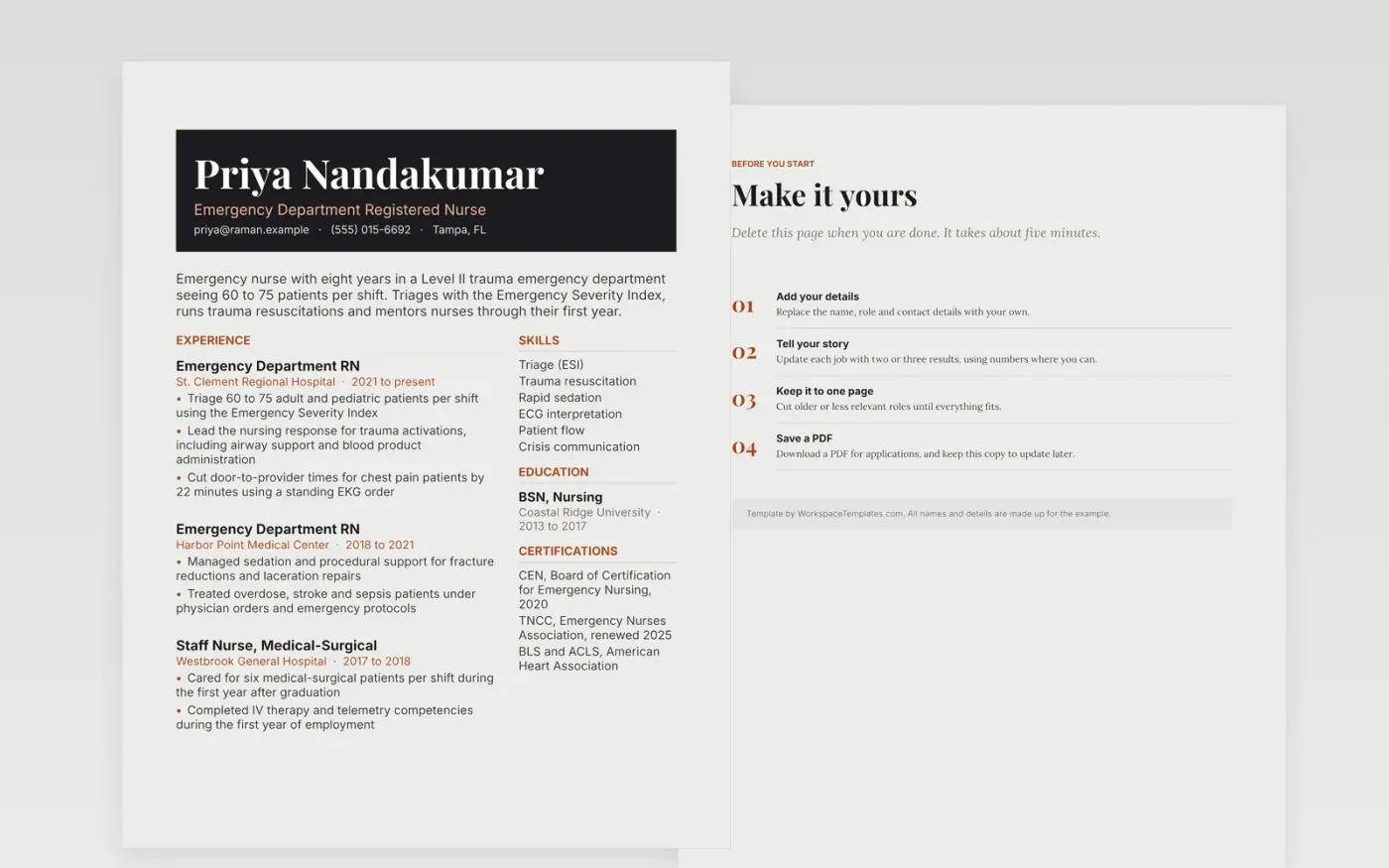
Emergency department managers judge a nurse by speed and judgment under pressure. They ask how many patients were triaged per shift, whether the nurse has run trauma resuscitations, and which certifications back up the work. The Emergency Severity Index, TNCC and CEN are the credentials that answer those questions most quickly. The header band carries name, role and certification, so a manager reads the credentials before anything else.
The sample nurse has eight years in a Level II trauma department, after a first job on a medical-surgical floor. Replace the hospital, patient counts and procedures with figures from your own shifts, and only claim what you actually did. Practical tip: start each bullet with the action and add the volume, such as patients triaged or minutes saved. Emergency managers often scan the first few bullets for these figures.
Make a copy in Google Docs, or download the Word file.
Type over the sample text with your own details.
Delete the guide page when you are done.
Print it, or save it as a PDF.
Put the license, the CEN if you hold it, and the TNCC or ENPC course cards near the top. Then list your triage volume and the most serious cases you managed. Emergency hiring leads look for these first, because they show readiness for a fast department. A two-sentence summary that names your department and years of ER work is enough.
It is not required by every hospital, but the Certified Emergency Nurse credential from the Board of Certification for Emergency Nursing is widely respected. Eligibility usually requires an active RN license and a set number of hours in emergency nursing. Check the current requirements on the board's website before you list it. Until you hold it, mention your ENA course work instead.
Write the course name, the sponsoring body and the year completed, such as TNCC from the Emergency Nurses Association. Group courses into one section for quick scanning, and drop any that have lapsed. Only list ENPC or PALS if the job involves pediatric patients, since most departments expect them. Renewal dates matter because many courses expire after four years.
Docs + Word1 page
Free
Docs + Word1 page
Free
Docs + Word1 page
Free
Docs + Word1 page
Free
Docs + Word1 page
Free
Docs + Word1 page
Free
Docs + Word1 page
Free
Docs + Word1 page
Free
Docs + Word1 page
Free
Docs + Word1 page
Free
Docs + Word1 page
Free
Docs + Word1 page
Free
Docs + Word1 page
Free
Docs + Word1 page
Free
Docs + Word1 page
Free