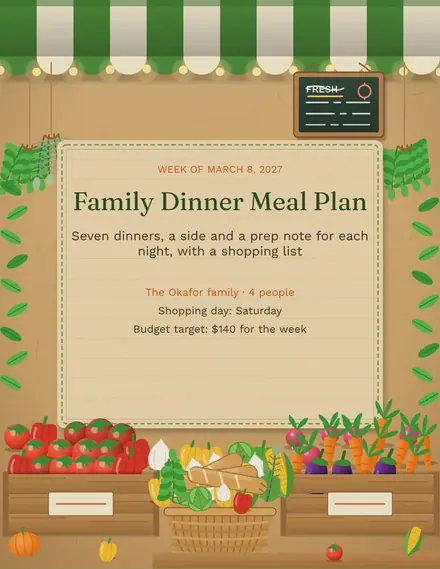
Family Dinner Meal Plan
Docs + Word3 pages
Free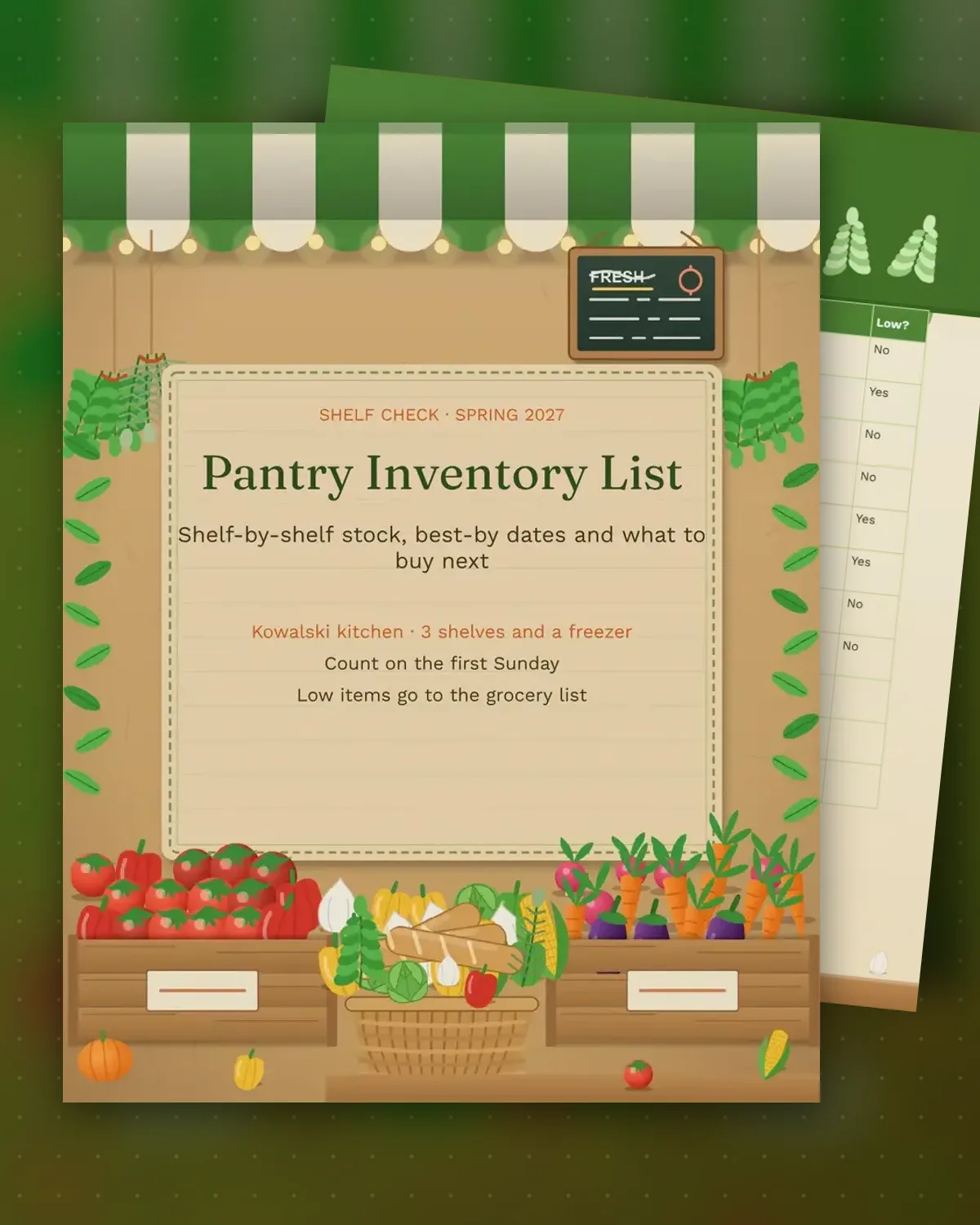
Most pantries hold three of everything and no bread. A shelf-by-shelf count fixes that: each item gets a location, a quantity, a best-by date and a low flag, so the grocery list writes itself. The sample kitchen has a top shelf of canned goods, a middle shelf of dry staples, a bottom shelf for oils and sauces and a freezer with its own drawers.
The second page covers the freezer and fridge, which spoil faster and get forgotten, and ends with a running-low list that carries straight into the next shop. Run the count monthly, as in the sample, and move the oldest items to the front of each shelf so they get used first. The count takes about twenty minutes.
Make a copy in Google Docs, or download the Word file.
Type over the sample text with your own details.
Delete the guide page when you are done.
Print it, or save it as a PDF.
Count what you use every week and anything that goes bad. Spices and sauces can go on a separate list if you only check them every few months.
It is the date the maker suggests for the best quality. Many dry goods stay safe past it, so use your judgment and check for spoilage, damage or an odd smell.
Yes. Keep one row per shelf or bin, and skip the freezer table if you do not have one. The layout works for a single cupboard as well as a full kitchen.
Docs + Word3 pages
Free
Docs + Word3 pages
Free
Docs + Word3 pages
Free
Docs + Word3 pages
Free
Docs + Word3 pages
Free
Docs + Word3 pages
Free
Docs + Word3 pages
Free
Docs + Word3 pages
Free
Docs + Word3 pages
Free
Docs + Word3 pages
Free
Docs + Word3 pages
Free
Docs + Word3 pages
Free
Docs + Word3 pages
Free
Docs + Word3 pages
Free