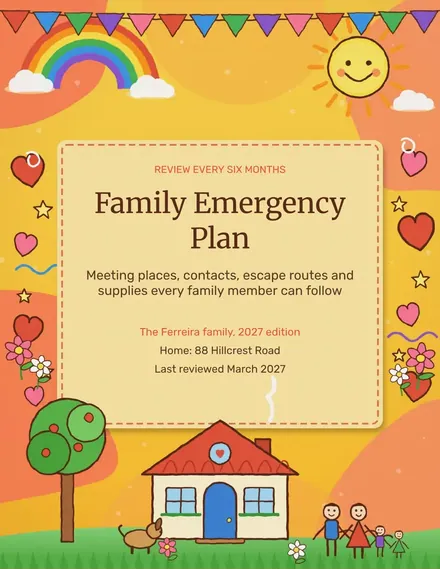
Family Emergency Plan
Docs + Word3 pages
Free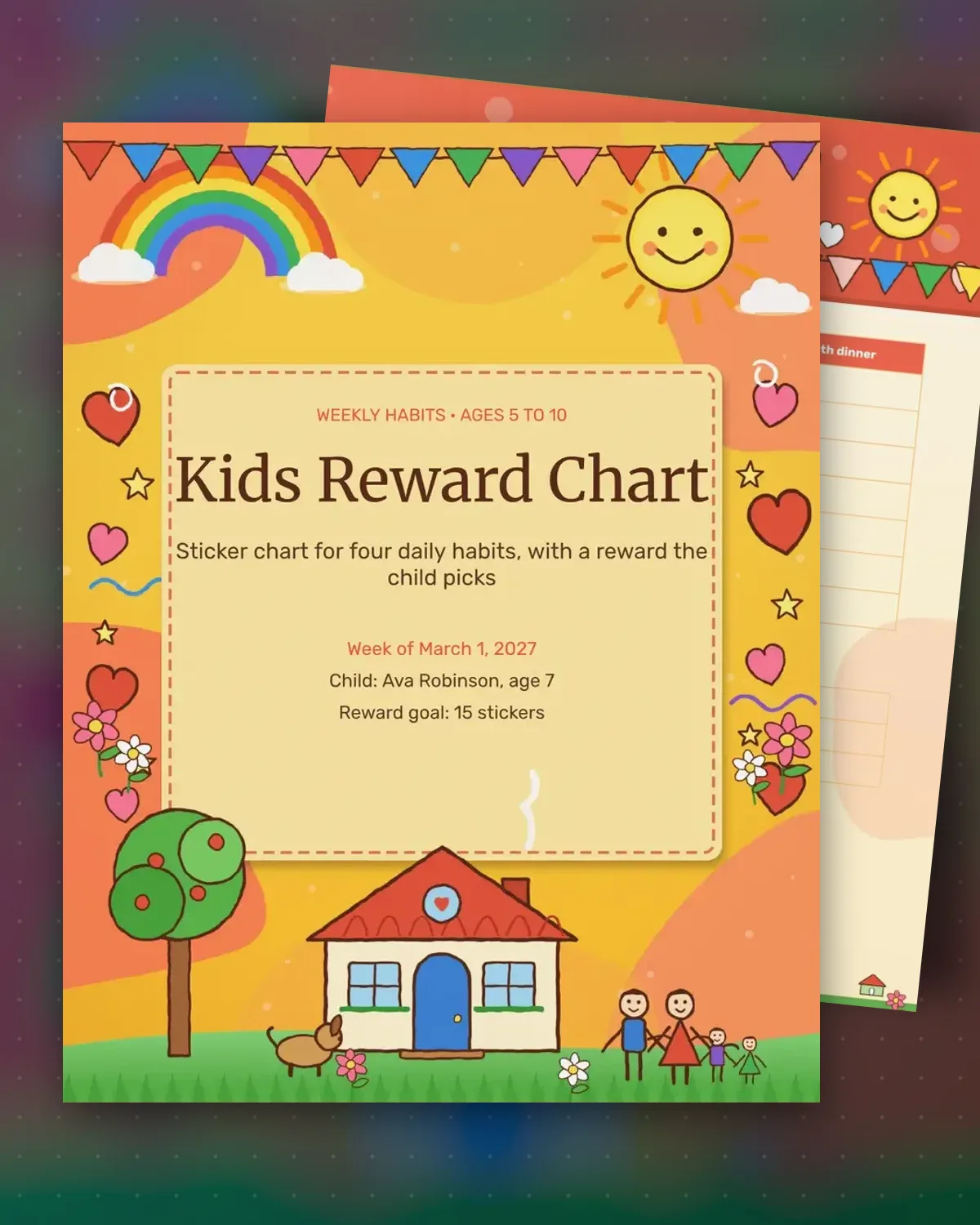
Stickers work best when a child can see progress at a glance. This chart gives each good habit its own row and each day its own column, so a week of effort is visible in one look. A parent marks the box when the habit happens without a reminder, and the stars are counted at bedtime.
The sample follows Ava, age 7, who works toward a pizza night with a friend. The reward menu lists each option with a star cost, so the child picks the prize and sees what it takes to earn it. Change the habits, the star values and the rewards to fit your household, and keep the rules short enough to read aloud.
Make a copy in Google Docs, or download the Word file.
Type over the sample text with your own details.
Delete the guide page when you are done.
Print it, or save it as a PDF.
Most charts work well from about age four to ten. Younger children do best with two or three habits and pictures, while older kids can track more and help set the rewards.
Scale the cost to the reward. Small treats can cost five or ten stars, and a bigger outing might need twenty or more. The sample menu shows a range you can adjust.
Leave the box blank and keep the stars already earned. The rules section explains how to talk through a miss and start again the next day.
Docs + Word3 pages
Free
Docs + Word3 pages
Free
Docs + Word3 pages
Free
Docs + Word3 pages
Free
Docs + Word3 pages
Free
Docs + Word3 pages
Free
Docs + Word3 pages
Free
Docs + Word3 pages
Free
Docs + Word3 pages
Free
Docs + Word3 pages
Free
Docs + Word3 pages
Free
Docs + Word3 pages
Free
Docs + Word3 pages
Free
Docs + Word3 pages
Free