Pet Sitter Instructions
Docs + Word3 pages
Free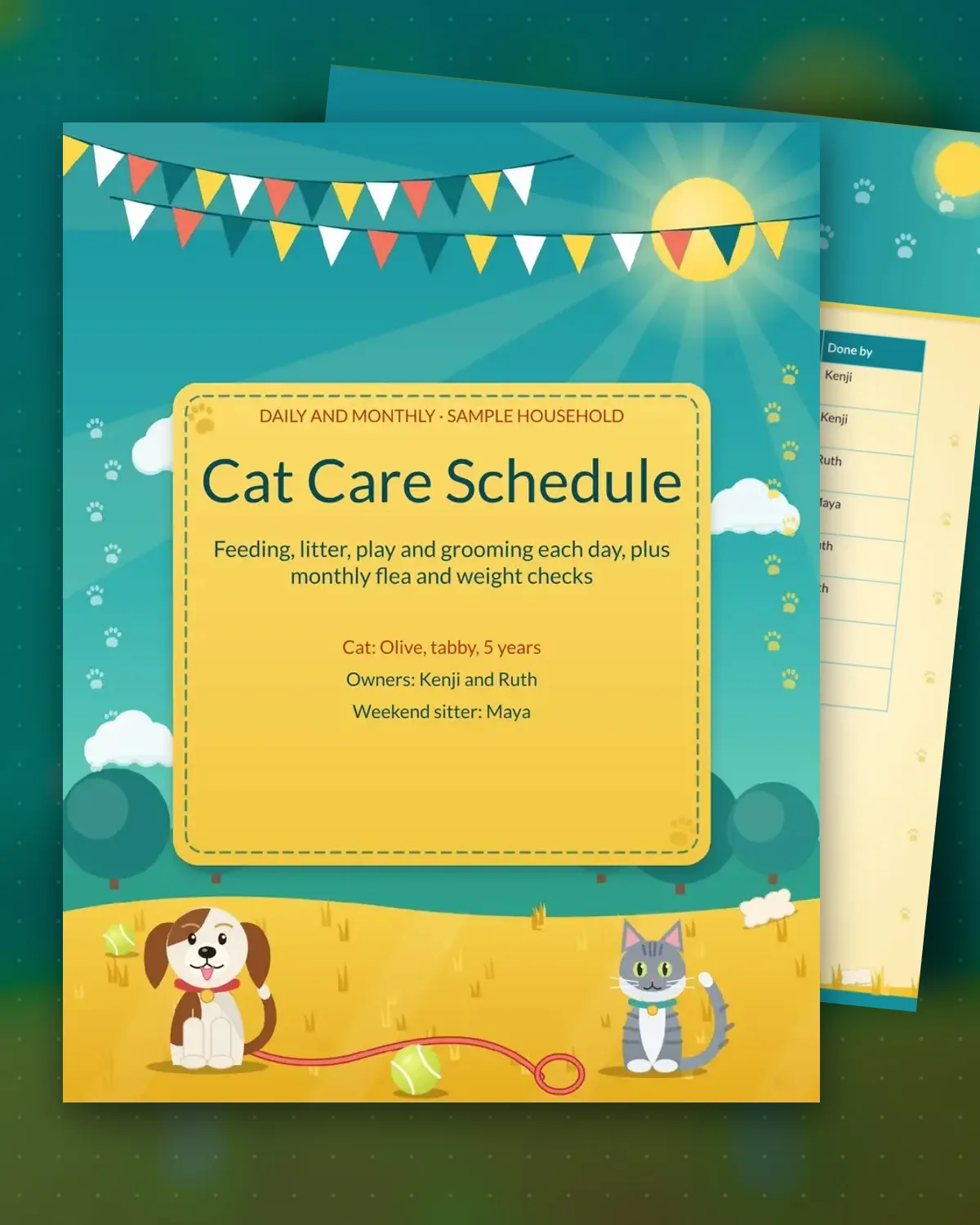
Cats are tidy, routine animals, and small changes in feeding or litter habits are often the first sign that something is off. A written schedule keeps the daily tasks on track and makes it easy for a sitter or a second person in the home to step in without guessing what the cat needs.
The sample follows Olive, a five-year-old tabby shared by two owners and a weekend sitter. The first page lists each daily job with an amount and a name, so the work is visible to everyone. The second page tracks monthly flea treatment, nail trims and weight, plus a notes column for changes in mood or appetite. Confirm treatment choices and any weight target with your veterinarian before starting a new routine.
Make a copy in Google Docs, or download the Word file.
Type over the sample text with your own details.
Delete the guide page when you are done.
Print it, or save it as a PDF.
Once or twice a day is common. Many cats prefer a clean box, so check the schedule against how often your cat uses it.
A steady weight is an easy sign of health. Bring the log to the vet, who can compare it with past visits.
Yes. Add a second row for each cat in the daily table, or make one copy per cat.
Docs + Word3 pages
Free
Docs + Word3 pages
Free
Docs + Word3 pages
Free
Docs + Word3 pages
Free
Docs + Word3 pages
Free
Docs + Word3 pages
Free
Docs + Word3 pages
Free
Docs + Word3 pages
Free
Docs + Word3 pages
Free
Docs + Word3 pages
Free
Docs + Word3 pages
Free